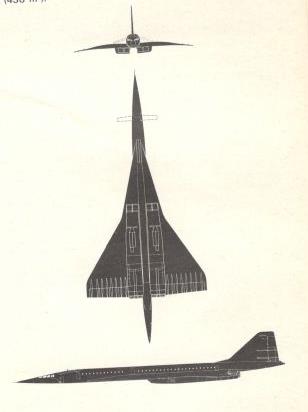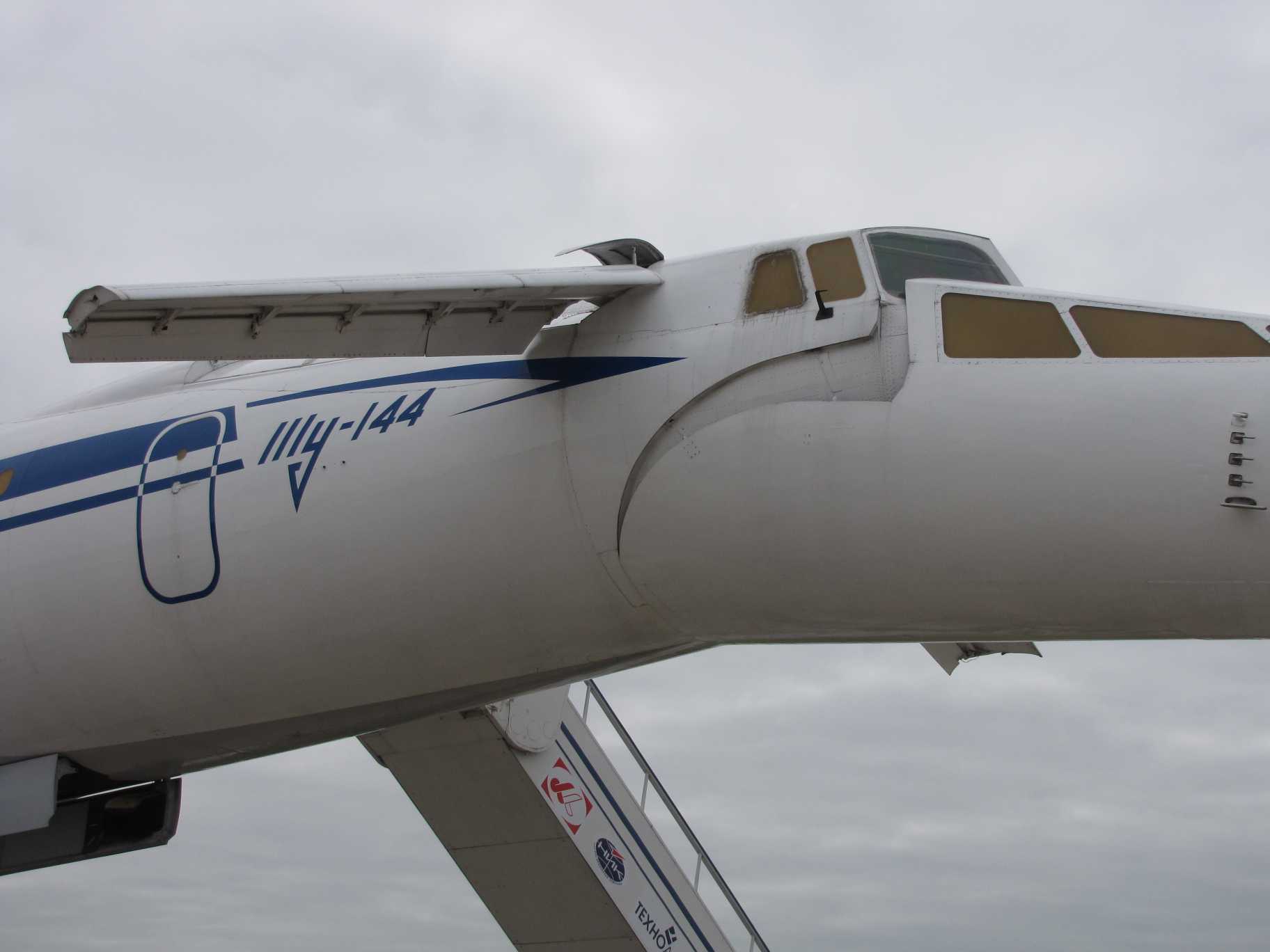
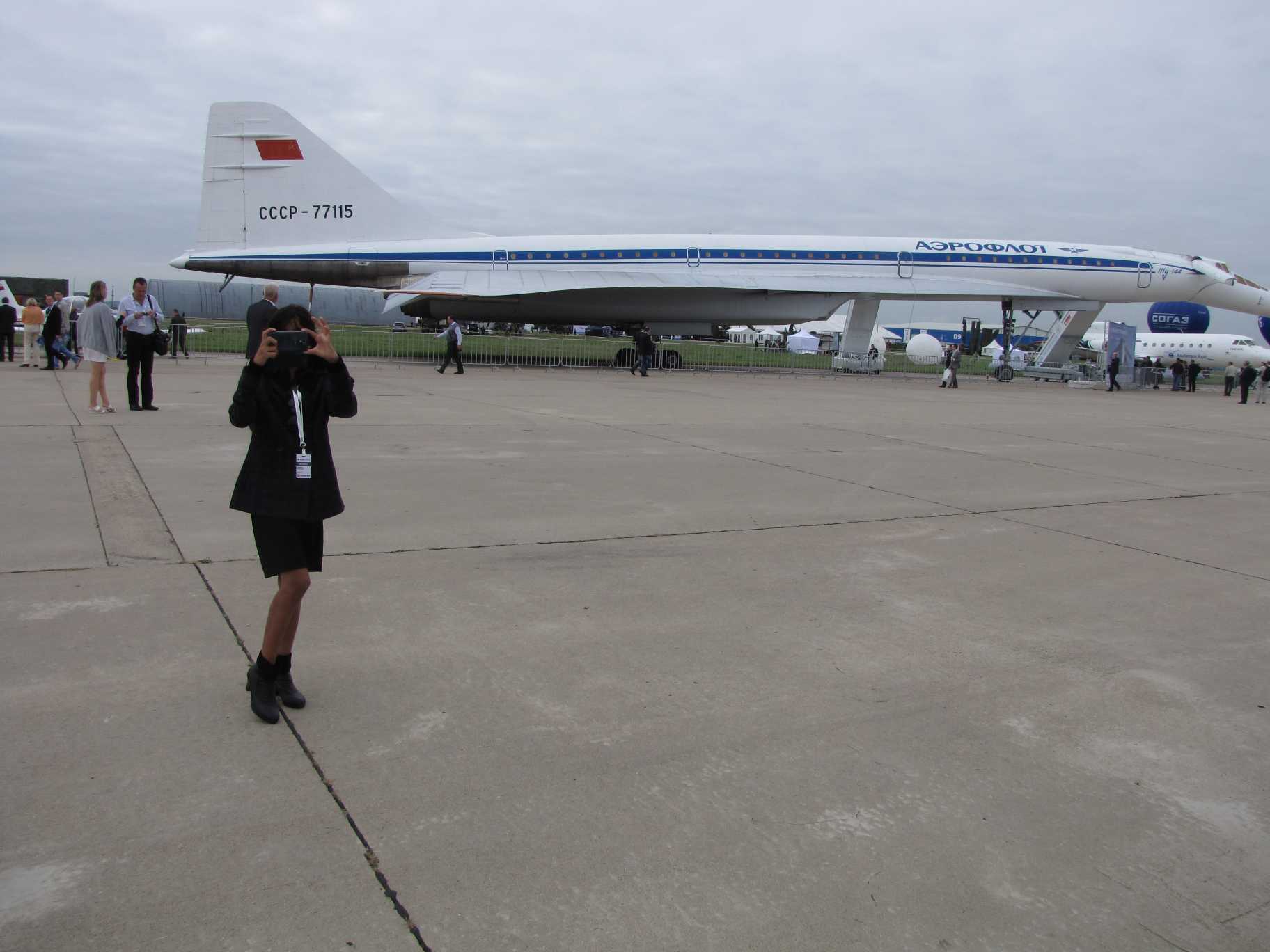
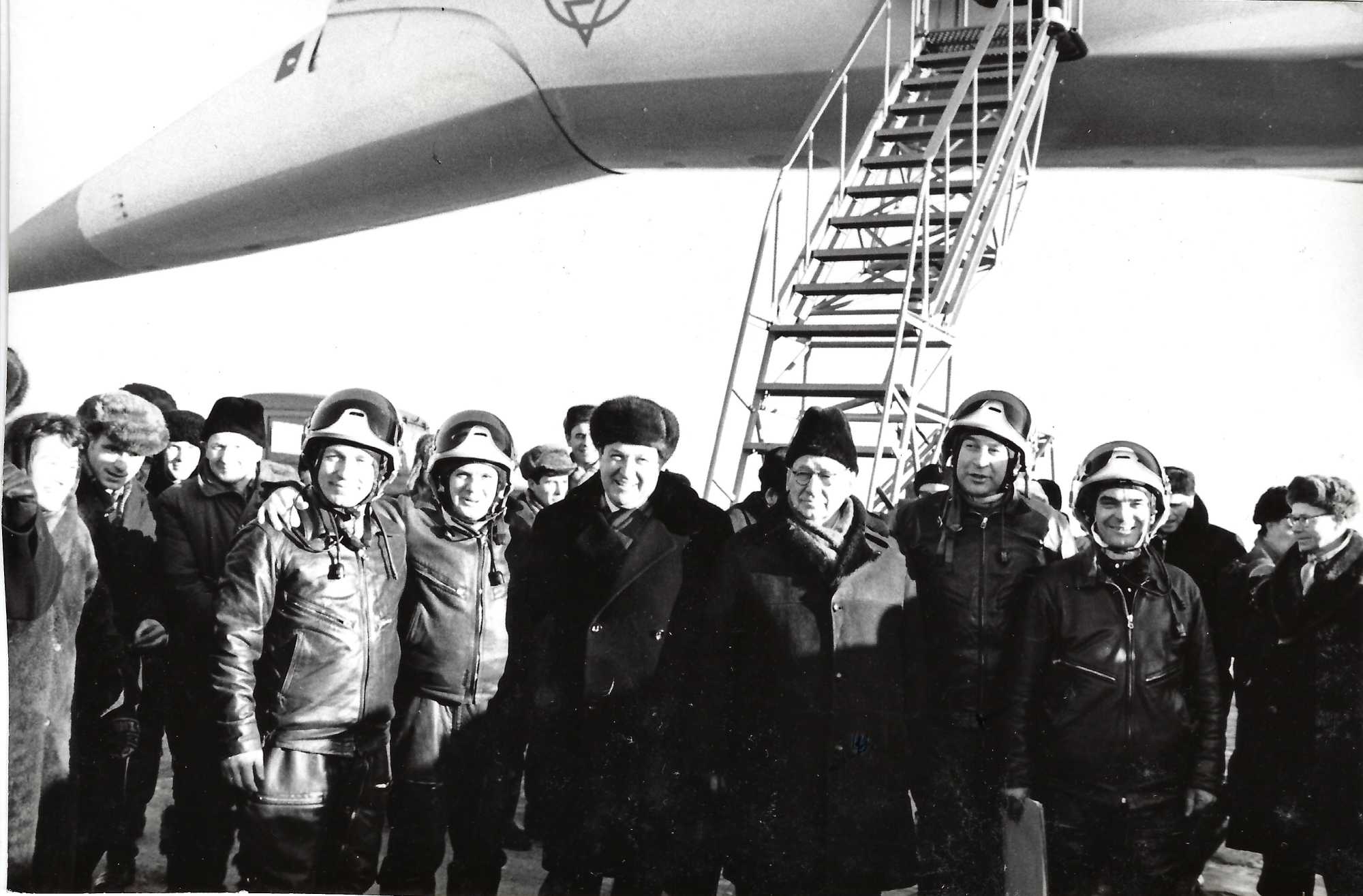
The production-standard Tu.144 described and illustrated on these pages shares little more than a generally similar configuration with the prototype to which this designation was first applied and which flew for the first time on December 31, 1968. The current model has been lengthened by 20 ft 8 in (6.30 m) and the compound delta wing is of 3 ft 9 in (1,15 m) greater span than the ogee wing of the original aircraft; the uprated engines are housed by relocated nacelles, and retractable noseplanes have been added.
First pre-production aircraft (representative of the production configuration) flown September 1971, and six aircraft of production standard were expected to have flown by mid-1974 when a production rate of one every three weeks was scheduled against an anticipated Aeroflot requirement for approximately 75 aircraft. Initial passenger services are expected to be flown within the Soviet Union late 1975.
Basic flight crew of three and maximum of up to 140 passengers in single-class with three-plus-two and two-plus-two Sealing. long-range supersonic commercial transport.
| Country of Origin | USSR |
| Power Plant | Four 33,100 lb (15 000 kg) dry and 44.000 lb (20 000 kg) reheat Kuznetsov NK-144 turbofans. |
| Performance | Max. cruise. 1,550 mph (2 500 km/h) or Mach 2.3 at altitudes up to 59.000 ft (18 000 m); |
| subsonic cruise, 614 mph (988 km/h) or Mach 0.93 at 37,730 ft (11 500 m): range (with full payload). 4.000 mls (6 440 km); | |
| cruising altitude, 52,500 ft (16 460 m) to 59,000 ft (18 000 m). | |
| Weights | Typical operational empty. 187,395 lb (85 000 kg): |
| max. take-oft. 396,830 lb (180 000 kg). | |
| Dimensions | Span 94 ft 6 in (28.80 m): |
| length, 215 ft 6 ½ in (65.70 m); | |
| height. 42 ft 3 in (12.85 m): | |
| wing area. 4,720 sq ft (438 m2). |