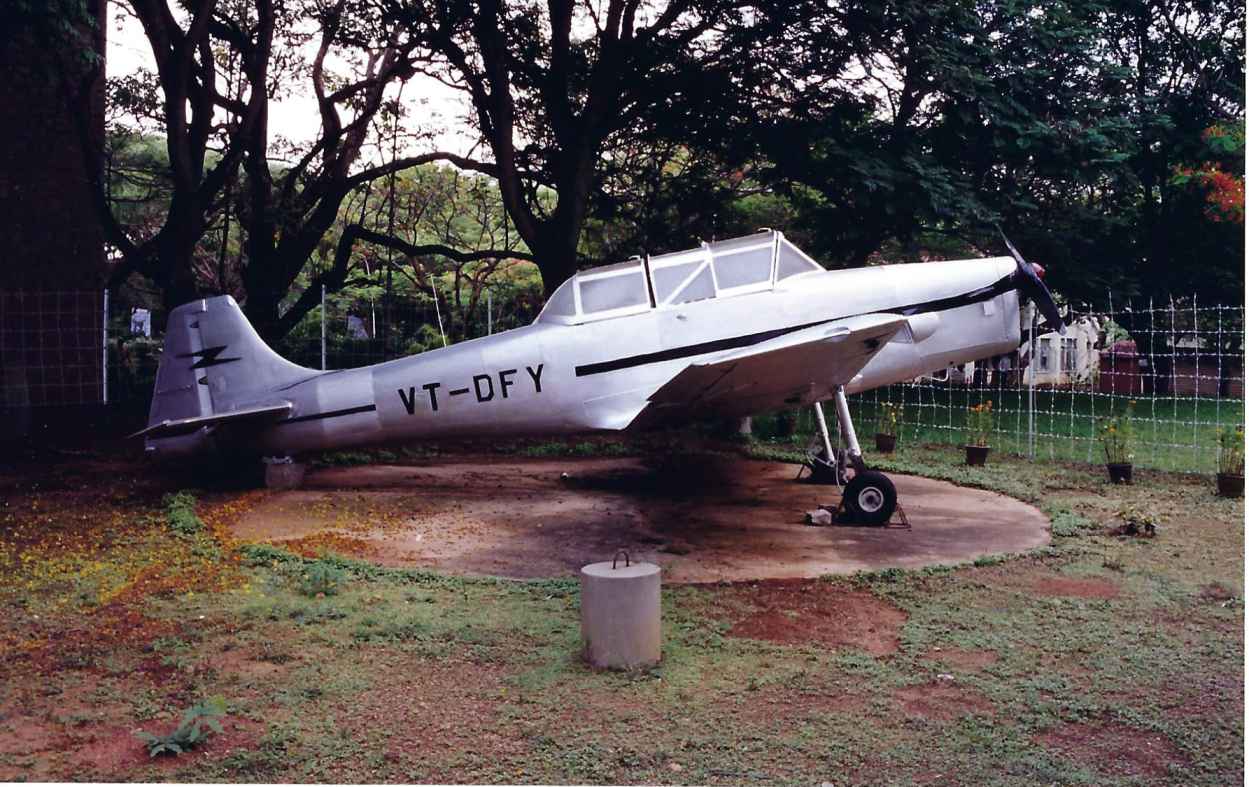
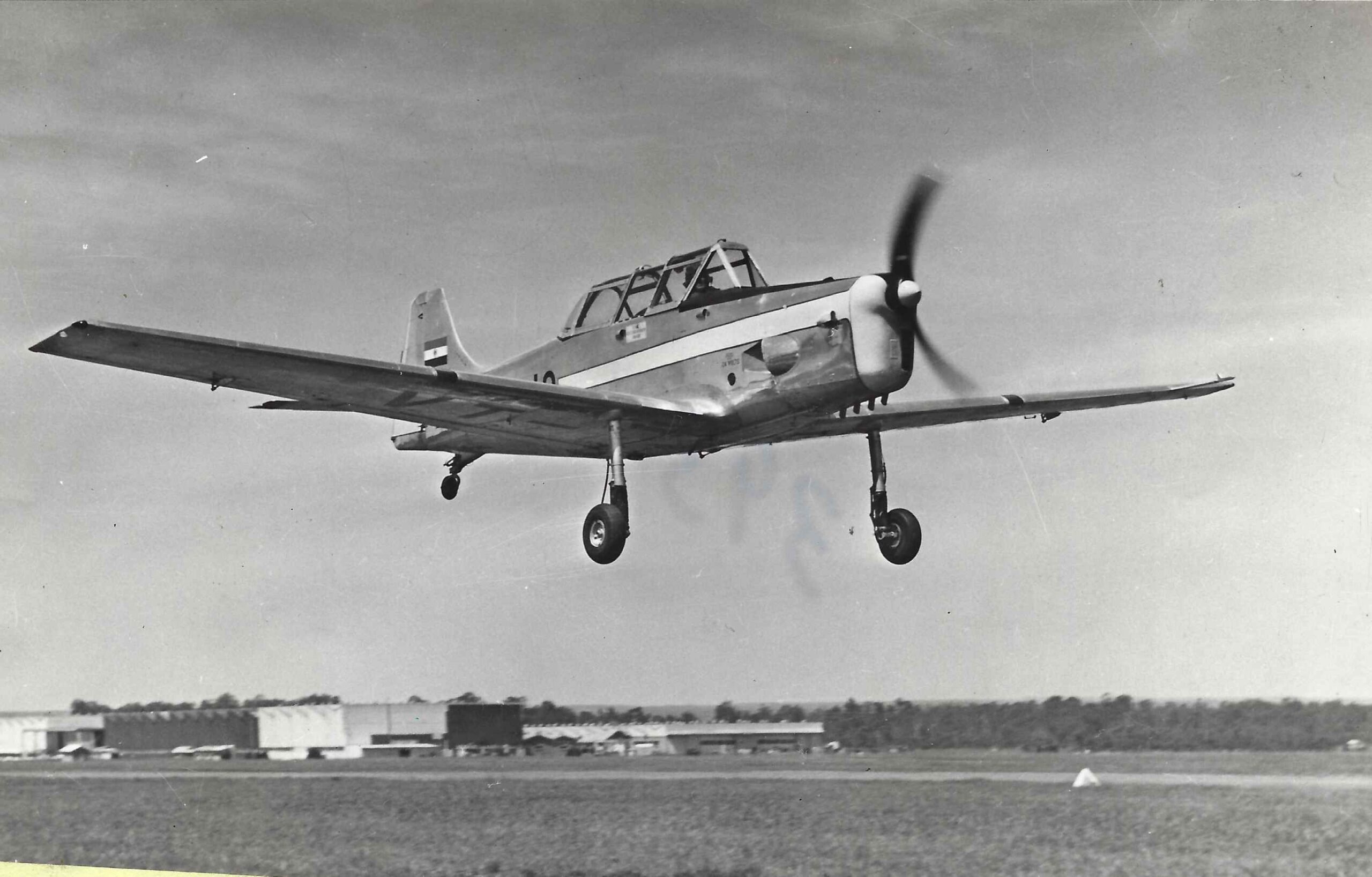
Intended as a replacement to the Tiger Moth primary trainer, the HT-2 was the first aircraft of indigenous design to carry the Indian Air Force insignia. A first batch of six HT-2s were flown to Palam in January 1953 for display and demonstration but the type was officially introduced as an elementary trainer in the service on 10th January 1955.
HT-2s became primary flying equipment at the Flying Instructors School Tambaram and the Air Force Flying College, Jodhpur where pupil pilots logged some 40 hours on the type before advancing to Harvard basic trainers. The Indian Navy received three HT-2s for its Fleet Requirements Unit at Cochin in 1956 and a number were allocated to the Auxiliary Air Force till this was disbanded and absorbed by the regular Air Force in the aftermath of the 1962 conflict with China.
Under the emergency flying training scheme which initially envisaged the graduation of near-ly a thousand pilots each year to support the major Air Force expansion plans (1963-67), HT-2s from a number of civil flying clubs were taken over and these, supplemented by aircraft from other Air Force training units, were provided to the Pilot Training Establishment (P.T.E.) organised at Allahabad in mid-1962. Pupil pilots, after flying grading at civil flying clubs were given some 20 hours on the HT-2 before proceeding to the Harvard at Jodhpur.
In 1966, the P.T.E. was transformed to the Elementary Flying School (E.F.S.) and re-located at Bidar where hundreds of pupil pilots of the Indian Air Force, Navy and foreign air arms have since trained on the HT-2, logging 40 hours before proceeding to the Harvard at Dundigal.
Notes :
Soon after independence the National Government reconstituted the board of directors of Hindustan Aircraft Ltd. Bangalore and a nucleus Design & Development department was established, with Dr. V.M. Ghatage as chief designer. In September 1948, the GOI directed that HAL proceed with the development of three aircraft types, designated the HT-2 primary trainer, HT-10 advanced trainer and HT-11 basic trainer. In October 1948 orders were given for two prototypes of the Hindustan Trainer No. 2 manufactured to the specifications finalised by the I.A.F. and D.G.C.A.
Of all-metal construction and powered by a 145 h.p. Gypsy Major 10, the prototype HT-2 (VT-DFY) first flew on August 5th 1951, the second prototype powered by a 155 h.p. Cirrus Major III, flying on February 19th, 1952. A total of 169 HT-2s were manufactured, production terminating in 1948; recipients were the Indian Air Force, Navy, flying clubs while single examples were presented to Indonesia and Singapore; the Ghana Air Force purchased twelve HT-2s in 1959.
| Country of origin | India |
| Performance | Max. speed 130 m.p.h. (209 km./hr.) at SL |
| Cruising speed 115 m.p.h. (185 km./hr.) | |
| Rate of climb 800 ft./min. (244 m./min.) | |
| Service ceiling 14,500 ft. (4,420 m.) | |
| Range 350 miles (563 km.) | |
| Weights | Empty 1,620 lb. (735.5 kg.) |
| Max. loaded 2,240 lb. (1,017 kg.) | |
| Dimensions | Span 35 ft. 2 in. (10.72 m.) |
| Length 25 ft. 2 ½ in. (7.68 m.) | |
| Height 8 ft. 11 in. (2.72 m.) | |
| Wing area 173.4 sq. ft. (16.11 sq. m. |