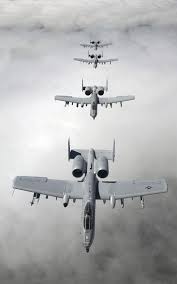
1957 was a remarkable year with regard to new shapes in the Indian skies. Even as the first Mystere IVAs and additional Ouragans from France, Canberra bombers from Britain were arriving in the country and the Gnat contract was being firmed, the GOI was negotiating with Britain for the supply of Hawker Hunters. The Hunter Mark 6 represented the design and production climax of the basic Hunter concept and although the Indian Air Force had, for some years, been keen on its procurement, the British Government’s initial offer was restricted to the Mark 4 which did not meet the requirement. Successful negotiations during the summer of 1957 following evaluation of the Mk. 6 by IAF test pilots in Britain, concluded in an order for 160 aircraft signed on 1st September 1957. Twenty five IAF pilots received short conversion courses on the Hunter with the RAF at Benson or with the manufacturers at Coventry. The first Hunter in IAF insignia, powered by an Avon 203 engine and designated the Mk.F.56, flew on October 11th 1957 and the British Government released a number of RAF-ordered Hunters to speed deliveries. Twelve Hunters were returned from RAF Maintenance Units and thirty two aircraft of a cancelled RAF order were completed to Indian standards (registered as serials BA201-BA232, the ex-RAF Hunters sold to India being serials BA233-BA248). The forty-ninth and subsequent aircraft were equipped with a 10 ft: 6 in. (3.20 m.) diameter ring-slot landing brake parachute in the tail. Also ordered were 22 Hunter T.66 (export model T.7) two-seat trainers, the first aircraft flying at Dunsfold on August 6th 1958 and deliveries commencing from 1959.
By December 1957, Indian Air Force pilots started ferrying their Hunters (equipped with four 100-gallon (455 litre) drop tanks each) via Sharjah and Jamnagar, No.7 Squadron becoming the first unit to re-equip with the type. Indicative of the rapidity with which formations achieved operational status was the IAF flying twelve Hunters at the R-Day parade on 26th January 1958 and the spectacular formation display at an airshow at Ambala on 1st April 1958 which celebrated the I.A.F.’s silver jubilee. The complete order for the 182 Hunters was fulfilled by February 1961 with six squadrons (Nos. 7, 14, 17, 20, 27, 37) and an Operational Training Unit operating the type. One or two Hunter T.66s were given to each fighter squadron and have since been also used as ‘hack’ aircraft.
The versatile fighter/ground attack Hunter was the backbone of the Indian Air Force as it was also assigned the air defence role in North India till this function was shared with the light-weight Gnat after four years. The 3-day police action in Goa involved the Hunter in a brief shoot-up. At 0710 on 18th December 1961 six Hunters of No.17 Squadron from Sambre (Belgaum) attacked the Bambolim wireless station with RPs, while the rest of No.17 was deployed for the air defence of Poona and Bombay. A four-Hunter detachment of No. 20 Squadron was also based at Santa Cruz but had no need to fly any sorties in earnest. Hunter units remained only on stand-by during the 1962 frontier war with China but later, in 1963, during “Exercise Shiksha” the Hunters were required to defend key points by day alongside RAF Javelins and USAF F-100Ds, the exercise showing up the IAF’s weakness in terms of all-weather defence.
The operational virtuosity of the Hunter was fully demonstrated during the three weeks of shooting war in September 1965. Hunter squadrons in the western theatre mounted counter-air, interdiction, ground attack sorties, provided close support for the army and engaged raiding enemy aircraft in air combat. The major Pakistani air base complex at Sargodha was attacked by day on 7th September by ten Hunters and other PAF bases, including those at Chaklala, Peshawar and Kohat were raided by Hunters in the first few days of grim combat. On the 8th September, Hunters lent direct support to ground forces in the Lahore sector; a flight of 4 Hunters destroyed by rockets an entire supply and ammunition train near Raiwind and attacked tanks and vehicle columns threatening 4th Mountain Division positions in the Kasur-Khem Karan area. On the 9th, four Hunters of No. 20 Squadron, flying lo lo, attacked a Pak. train carrying AFVs and destroyed 23 tanks and a number of vehicles by rockets and cannon all the while being subjected to intense anti-aircraft fire. Ground support efforts by Hunters in the Khem Karan area were intensified during the second week of the war, Pak. vehicles, troop concentrations, gun positions and harbours being subjected to low level attack, a particularly successful action being flown on the 14th. Interdiction missions were flown against the rail and road communication network south-west of Lahore and Hunter “rhubarbs” into Pakistani territory claimed a steady toll of tanks and ’13’ vehicles. The Hunter could hold its own in air combat as was demonstrated on the very first day of war. No. 27 Squadron Hunters, on CAP over Halwara air base at dusk on 6th September, shot down two raiding Sabres while, the same evening over 1000 miles (1610 km.) to the east, No. 14 Squadron Hunters claimed two Sabre kills over Kalaikunda air base. Dog fights near the FDLs in the West , were frequent and by the wars end, Hunters had chalked up as many air victories as had their Gnat contemporaries.
Although series production of the Hunter had ceased in the U.K., some NATO air forces were releasing their Hunter Mk.4s (Belgium, Netherlands) and these aircraft were refurbished by the manufacturers, being brought upto Mark F.G.A.9 standards. The Indian Air Force procured some 36 of these re-furbished Hunters, designated Mk.F.56A, in 1966-67 as well as twelve two-seat Mk.T.66D Hunter trainers with deliveries being effected from 1967, both types being powered by the higher-rated Avon 207 engine.
Hunter formations were fully engaged in the December 1971 conflict, mounting the bulk of interdiction and ground attack sorties flown, from Karachi in the West to Chittagong in the East. Pakistan’s pre-emptive strike attempt on the 3rd December evening was of no consequence but the Indian Air Force, prepared for just such an eventuality, hit back with nearly 500 sorties flown against Pak. airbases, installations and strategic targets on the 4th December itself. 3 Hunters flying lo lo lo over the sea, attacked the major oil installations at Keamari, near Karachi harbour at 0852 hours, this being followed by an-other 3 Hunter-strike on Keamari at 1730 hours that evening, leaving the port-city under billows of black-oil smoke and marking the target brilliantly for the bombers at night. 2500 kilometres to the east, 4 Hunters of No. 14 Squadron flying a lo-hi profile over the sea, bombed the Chittagong airfield and strafed installations and ships in the harbour early in the morning paving the way for Indian Naval Seahawks from the “Vikrant”. Up north, Hunters of No.20 Squadron achieved conspicious results in the first few days of hostilities. In the early hours of the 4th December, two Hunters of the unit raided Peshawar air base, a deep-penetration strike which destroyed three aircraft on the ground and set a POL dump ablaze, the Hunters being recovered to base inspite of the heavy ground fire and enemy fighters in pursuit. Two Hunters set out for the second strike of the day, against Kohat airbase; the third strike was against Chaklala (near Rawalpindi) where 3 transport aircraft, including a C-130, were destroyed on the ground; No. 20 Squadron also attacked Mureed airfield where one Mirage III was destroyed along with a transport aircraft the Hunters rounding off the day with a second attack on Peshawar where two hangars and airfield installations were damaged. On the 5th December, four Hunters attacked Chaklala airfield, another C-130 and a Twin Otter being destroyed, Mianwali airfield (a third C-130 destroyed) while a four-Hunter mission struck at Lahore and Walton where transmitter huts, radar sites and installations were destroyed. A vital task alloted to No.20 Squadron was destruction of the major ADGC and radar centre at Sakesar, on the salt range, 20 miles east of Mianwali. Three Hunters engaged the installation with rockets and cannon and serious damage was inflicted, although two Hunters were lost in the effort. On 6th December, four Hunters carried out a strike on the Attock oil refinery south-east of Rawalpindi resulting in “a beautiful blaze” which later served as a navigational aid for IAF bombers. Attock was attacked twice as was the Mangla power dam; finally No. 20 Squadron claimed a total of 18 enemy aircraft destroyed in the air and on the ground, eight air bases attacked, and ten tanks, 40 vehicles, six railway engines, 40 wagons, rolling stock and an indeterminate number of troops on the ground. The squadron, along with No.27, was also involved with several close-sup-port missions in the Chhamb and Poonch areas, attacking formation headquarters, bunkers and troop concentrations.
On the desert front, three Hunter F.56s and one Hunter T.66, operating from Jaisalmer, responded to the assault on one company of the 23rd Punjab by a Pakistani armoured regiment by destroying twenty three T-59 tanks of the 27th Cavalry at Longewala on the 8th and 9th December. This epic action belongs to the Hunter and the O.T.U. instructors.
In the east, four Hunter squadrons supported the Indian Army’s lightning advance towards Dacca. Enemy strong points were hammered, retreating columns strafed, convoys and riverine craft destroyed, the Hunters being employed mostly for interdiction tasks. Hunters of No.14 Squadron were moved up to Jessore and operated from this former. P.A.F. airbase on its capture by the 9th Infantry Division. As the liberation of Bangladesh became imminent, Hunter squadrons were the first to switch from the Eastern to Western fronts and took part in strike actions before the cease fire on 17th December.
While the demand from many airforces for more refurbished Hunters continues, this outstanding aircraft will remain in front-line service with the Indian Air Force well into the seventies and thereafter shall find a niche of honour in the services’ history.
Notes :
The British Air Ministry specification F.3/48 for a single seat transonic day fighter resulted in the order for 3 prototypes of the Hawker P.1067 development in 1948, and the first Avon-powered prototype Hunter flew on June 20th 1951. The Hunter F.Mks.1 and 2 were essentially short range day interceptors while the Mk.4s had increased fuel capacity and were modified to overcome surging experienced with its engine when the four cannon were fired. Follow on modifications and refinements led to the virtually `second generation” Hunter Mk.6, the prototype being first flown by S/L Neville Duke on January 22nd 1954. Powered by an Avon 203 turbojet developing 10,000 lb.s.t. (4,540 kg.) (a 30% increase in power over the Mk.4’s Avon 115), the Mk.6 permitted a considerable increase in load carrying capability, reduced take off run and time to height. Initial aircraft were manufactured with straight wing leading edges but high altitude handling trials prompted an addition of the saw-tooth extended leading wing edge to counter possible pitch-up. For the intercept role, muzzle blast deflectors were fitted to counter a tendency to pitch down during high altitude gun firing. On later Mk.6s, a “flying tail” was introduced, with the power-operated elevator interconnected to change tail plane incidence. The Hunter Mk.56 was a Mk.6 with modifications incorporated for Indian conditions and the Mk.56As were minutely overhauled ex-Belgian and Dutch Hunters brought upto Mark 9 standards and powered by the 10,050 lb.s.t. (4,562 kg.) Avon 207.
The side-seating operational training version of the Hunter had a new front fuselage, fully duplicated flying controls and gunsights and retained two Aden cannon. The first proto-type flew on July 8th 1955 and the first production Hunter T.Mk.7 on October 11th 1957. The first operational trainer for India, designated T.66, flew at Dunsfold on 6th August 1958, but deliveries were delayed until new gun-blast deflectors were developed and the aircraft were finally delivered in 1959.
| Country of origin | United Kingdom |
| Armament | Four 30 m.m. Aden cannon with 150 r.p.g. Two 1000-1b. bombs or four 100-Imp. gallon napalm tanks or 24 x 3" rockets |
| Performance | Max. speed 627 m.p.h. (1,009 km/hr) at 36,000 ft. (10,970 m.) (Mach 0.95) |
| 715 m.p.h. (1150 km./hr.) at SL | |
| Initial climb rate 17,200 ft./min. (5,242 m./min.) | |
| Service ceiling 51,500 ft. (15,700 m.) | |
| Range (clean) 490 miles (788 km.) at 30,000 feet (9,145 m.) | |
| Ferry range (with reserves) 1,650 miles (2,655 km.) | |
| Weights | Empty 12,760 lb. (5,794 kg.) |
| AUW 17,750 lb. (8,060 kg.) | |
| Fuel capacity | Internal 392 Imp. gallons (1,782 litres) |
| Max. combat 792 Imp. gallons (3,600 litres) | |
| Dimensions | Span 33 ft. 8 in. (10.26 m.) |
| Length 45 ft. 10 ½ in. (13.98 m.) | |
| Height 13 ft. 1 ¾ in. (4.01 m.) | |
| Wing area 349 sq. ft. (32.42 sq. m.) |