Hawker Hurricane Mks. IIB, IIC, IV, XII
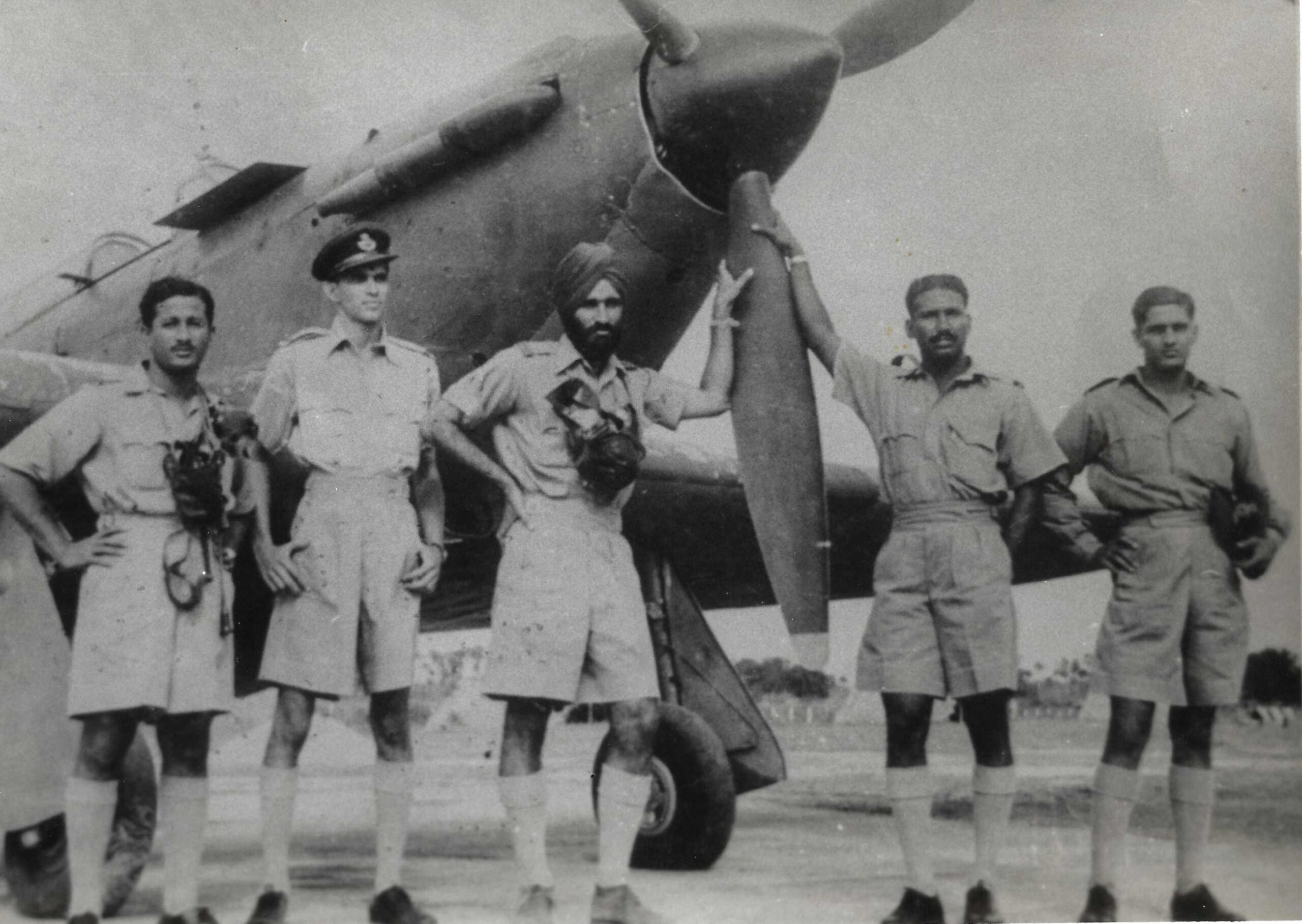
With the entry of Japan into the war against Britain and active hostilities moving towards the eastern frontiers of India, Indian opinion was growing apprehensive of the obsolete types in service with the Air Forces in India and the need to re-equip with more modern aircraft become imperative. As the availability of contemporary fighters to the East eased, No. 151 Operational Training Unit at Risalpur began to receive Hurricanes, early in 1942. The first unit to convert to the Hurricane at Risalpur was No.1 Squadron in June 1942 on its return from the First Burma Campaign, the conversion course lasting 12 weeks. As the shortage of aircraft was acute, the Hurricanes were collected from the R.A.F. in ones and twos from airfields all over India and even Ceylon. In early September, the squadron collected their Hurricane JIB fighter-bombers at Drigh Road thence proceeding to Bairagarh and Chhara for armament and operational training. Converting to the Hurricane in September 1942 was No. 2 Squadron followed, in December, by No. 6 Squadron which was raised on the Hurricane with personnel from the Madras and Bombay C.D. Flights, the technical personnel having received maintenance training on the type at Risalpur before the Squadron collected 15 Hurricane IICs from 308 M.U., Allahabad.
In April 1943 a detachment of seven Hurricanes from No. 2 Squadron, fitted with extra fuel tanks, commenced operations from Imphal, their chief task being recon-naissance over scattered groups of Chindets, strafing of Japanese rivercraft and traffic on the Mandalay-Myixkyina railway. While No. 1 Squadron’s Hurricanes were assigned watch and ward duties on the N.W. Frontier based at Miramshah and Kohat, No. 6 Fighter-Reconnaissance Squadron proceeded to Cox’s Bazar at end November 1943 and was operational till June 1944, serving as the “Eyes of the 14th Army”, performing Tac/Rs taking vertical and oblique photos and occasionally strafing Japanese transport. The unescorted Hurricanes, active mainly around the Buthidaung battle area, were often engaged by superior Japanese fighters despite which intensive operations were carried out exemplified by the 620 hours of operational flying by No. 6 Squadron in April 1944, highest recorded by any Allied squadron in the 3rd Tactical Air Force. Always flying as a unit of two, the Hurricanes became a familiar and friendly sight and were labelled variously as “The Maungdaw Twins” by the 5th Infantry Division or “The Arakan Twins” by the XV Corps or “The Kaladan Twins” by the West Africans. Also in action during various phases of the Arakan campaign were Nos. 4 and 9 Squadrons operating from Comilla, Chiringa and Feni, these units having been equipped with Hurricane IIBs in June 1943 and February 1944 respectively. The last squadron to be raised during the war was No. 10, at Lahore in February 1944 on Hurricane Mk. IVs. No. 3 Squadron, having supplanted its Audaxes for the Hurricane IIC in September 1943, collected 16 aircraft from Phaphamau and proceeded to Bairagarh for air gunnery and bombing exercises at No.1 Air Gunners School and eventually to Ranchi for low level attack training.
The Hurricanes of No. 3 Squadron relieved No. 1 Squadron at the N.W. Frontier, the former to gain experience operating against the Faqir of Ipi. No. 1 Squadron, brought in from Kohat during the seige and battles for Imphal in February 1944, initially shared all fighter-reconnaissance work with No. 28 Squadron R.A.F. No. 1 Squadron’s Hurricanes mounted offensive tactical, photographic and sector reconnaissance sorties and some very successful “Rhubarbs”, strafing attacks on the Imphal-Kohima, Tiddim, Palel-Tamu-Sittang roads and Ukhrul areas. In June 1944, No. 1 Squadron exchanged its IIBs for Hurricane IICs fitted with a forward-facing camera in place of the starboard cannon for low altitude photo reconnaissance. In November 1944 the squadron flew 524 operational sorties of over 1000 hours covering Japanese lines of retreat along the Chindwin and, latterly, flew Tac/Rs for IV Corps during the trans-Chindwin and Trans-Irrawaddy offensives. Later, No. 1 operated in the Meiktila area and in February 1945 moved to Sinthe. During the record fourteen month tour, the Squadron’s Hurricanes flew 4,813 operational sorties with the rate of aircraft serviceability “second to none in the world”. The Tac/R role was taken over by No. 7 Squadron which had re-equipped with Hurricane IICs in November 1944, the unit supporting XXXIII Corps in the advance down central Burma. No. 7 continued to operate at top pressure until 23rd May when their tour of operations came to an end and their long journey back to Quetta began. Serviceability in May had been an incredible 99.43%.
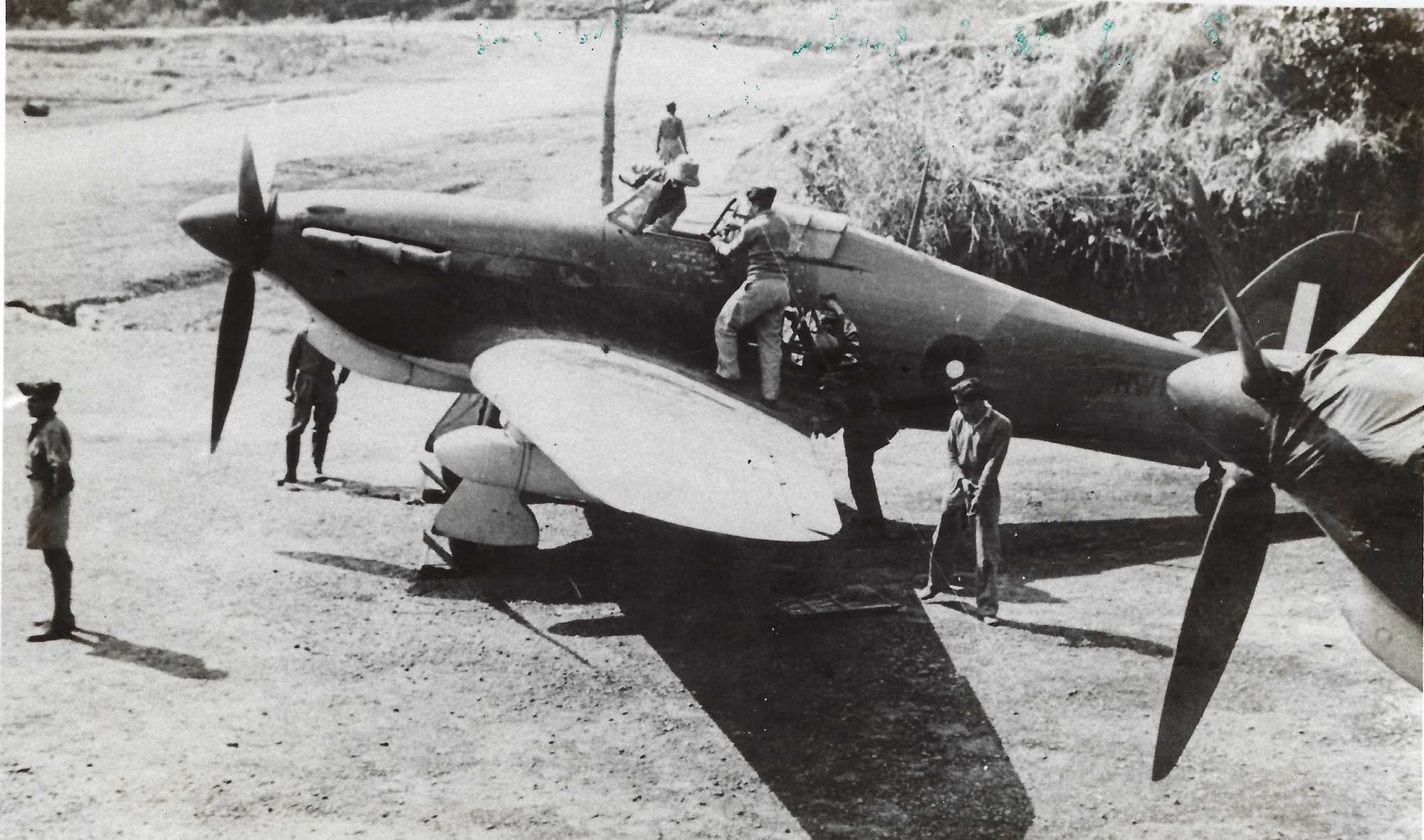
The Hurricanes of Nos. 4, 9 and 10 Squadrons were fitted with bomb racks at Agartala in November 1944 and joined by Nos. 2 and 3 Squadrons, the Hurricanes and ‘Hurribombers’ of five I.A.F. squadrons took part in the Arakan offensive beginning December 1944, the capture of Akyab and Ramree airfields, dislocation of communication lines, destruction of bridges, ferries, jetties, attack on hill features, and counterbattery patrols. Distinctive was the provision of a smoke screen by No. 4’s Hurricanes to cover the landing in Myebon peninsula, dropping of incendary bombs by No. 3 Squadron in the Kangaw battle and specialised road busting tactics by No. 10 Squadron. In a massed attack by the entire Squadron, using medium calibre bombs fused for mid-air explosion, No. 10 destroyed the village of Sakanmaw, near An, an important Japanese concentration point. On March 10th, 24 Hurribombers of Nos. 3 and 9 Squadrons attacked railway yards, an artillery transport harbour and troop concentrations south east of Tin Chaung, ground troops having marked the target with smoke mortars.
The victory in the Arakan reached its fruition in the great airborne operation when troops of the XV Corps were parachuted to re-occupy Rangoon on May 3rd 1945. The R.I.A.F Hurricane Squadrons at Kyaukpyu and Dabaing began packing and by June 1945 were all on their way out of Burma back home to bases in India.
The Indian Air Force was continuously provided wastage replacements, the Mks. IIB and ‘IC being followed by the “low attack” Mk. IVs with universal armament wings and the Canadian-built Mk. XIIs with Packard Merlin 29 engines, nearly 300 Hurricanes being received in the years 1942-45. At the end of the war, some Hurricanes were modified for anti-malarial DDT spraying, majority of the formations proceeding to Yelahanka for conversion to Spitfires in the summer of 1945.
Notes :
One of military aviations most outstanding aircraft, the Hawker Hurricane will be remembered forever for the part it played in the Battle of Britain in 1940 but even whilst the Hurricane was engaging the full weight of the Luftwaffe, considerable attention was being paid for further exploitation of the fighters’ basic design. Development of the Hurricane, by Sir Sydney Camm, had begun in 1933 around the powerful new Rolls Royce engine later to become the Merlin and the British Air Ministry drafted a specification around the design as it stood leading to the first R.A.F unit on the Hurricane Mk. I in December 1937. The Mk. IIBs, fitted with the more powerful Merlin XX rated at 1280 h.p. had heavier armament consisting of twelve-guns in the wings and were dubbed “Hurribombers” and the Mk. IICs had four cannon, intended for intruder duties. The Mk. IVs had Packard-built Merlin engines in British-built airframes and featured universal armament wings being capable of carrying bombs, drop tanks or “unrifled projectiles” as the 60-lb (27 kg.) rocket projectiles were then known. In Canada, introduction of the Packard-built Merlin 29 on the CCF Hurricane assembly line resulted in the Mk.XII which carried twelve 0.303 in. guns. Total production of all types was 14,233 machines, manufacture ceasing in September 1944.
| Country of Origin | United Kingdom |
| Performance | Max. speed 342 m.p.h. (550 km/hr) At 22,000 ft. (6,705 m.) |
| Range (internal fuel) 460 miles (740 km.) / (external fuel) 970 miles (1,560 km.) | |
| Service ceiling 35,600 ft. (10,850 m.) | |
| Armament | Four 20 m.m. Oerlikon cannon with 90 r.p.g. plus two 250-lb. (114 kg.) or 500-lb. bombs (229 kg.) |
| Weights | Empty 5,800 lb. (2,632 kg.) / Max. 7,800 lb. (3,540 kg.) |
| Dimensions | Span 40 ft. 0 in. (12.20 m.) |
| Length 32 ft. 2 ½ in. (9.81 m.) | |
| Height 8 ft. 9 in. (2.67 m.) | |
| Wing area 257.5 sq. ft. (23.92 sq. m.) |