
The Indian Air Force had expanded its transport component with the acquisition of considerable numbers of the C-47 but its military freight and airlift capability was extremely limited. This urgent requirement was sought to be fulfilled by the purchase, in late 1953, of a small number of C-119G Packets from the U.S.A. with revolutionary rear loading clamdoors, the type then being the most practical freighter available. The C-119Gs were formed into a Conversion & Training Flight with No.12 Squadron at Agra in February 1954, this Dakota unit functioning as a composite formation till it totally re-equipped with the Packet. By end 1954, the first batch of twenty-six C-119Gs on order were received.
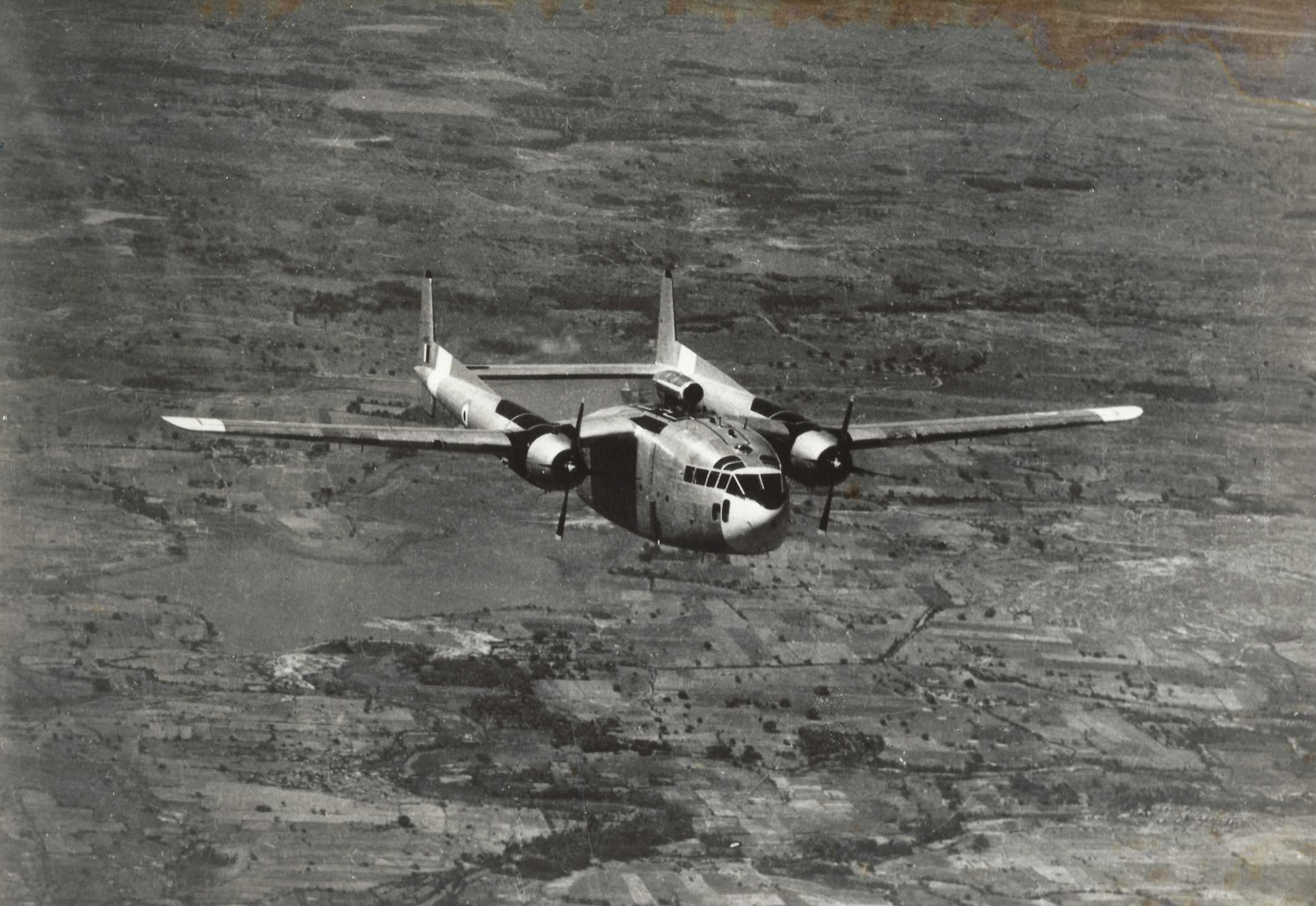
This medium freight and troop transport, also referred to as the Flying Boxcar, was the second shape with twin booms in the Indian skies and was used extensively for “trucking” operations, airlifting supplies, troops, heavy cargo and even aircraft. In August 1955, a C-119G (IK 447) transported a HT-2 trainer to Indonesia and, in 1956, the Packets’ air-lifted relief material from India to Egypt and Hungary. In 1957, another C-119G (IK 451) transported one of the first Gnats from U.K. for evaluation in India.
By the end of the fifties, the Indian Army had assumed responsibility for manning the Himalayan front, this necessitating an expansion of the airlift command. In July 1960 a second batch of C-119Gs, twenty-nine in number, were purchased and No. 19 Squadron equipped with the type. Aircrew and ground personnel from No. 12 Squadron were seconded to Congo in August 1960 to operate United Nations C-119Gs in that country; a second contingent was deputed in June 1961.
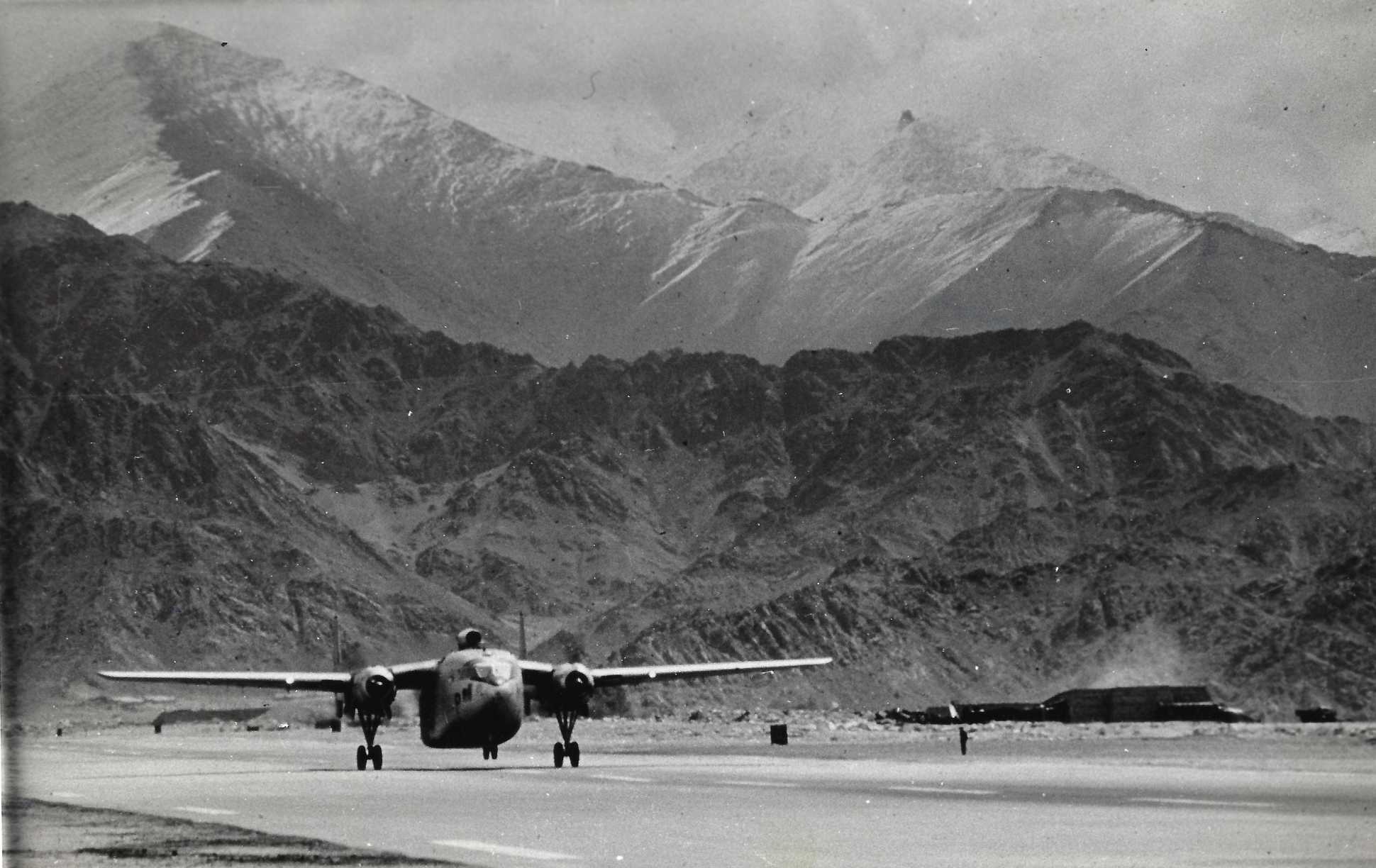
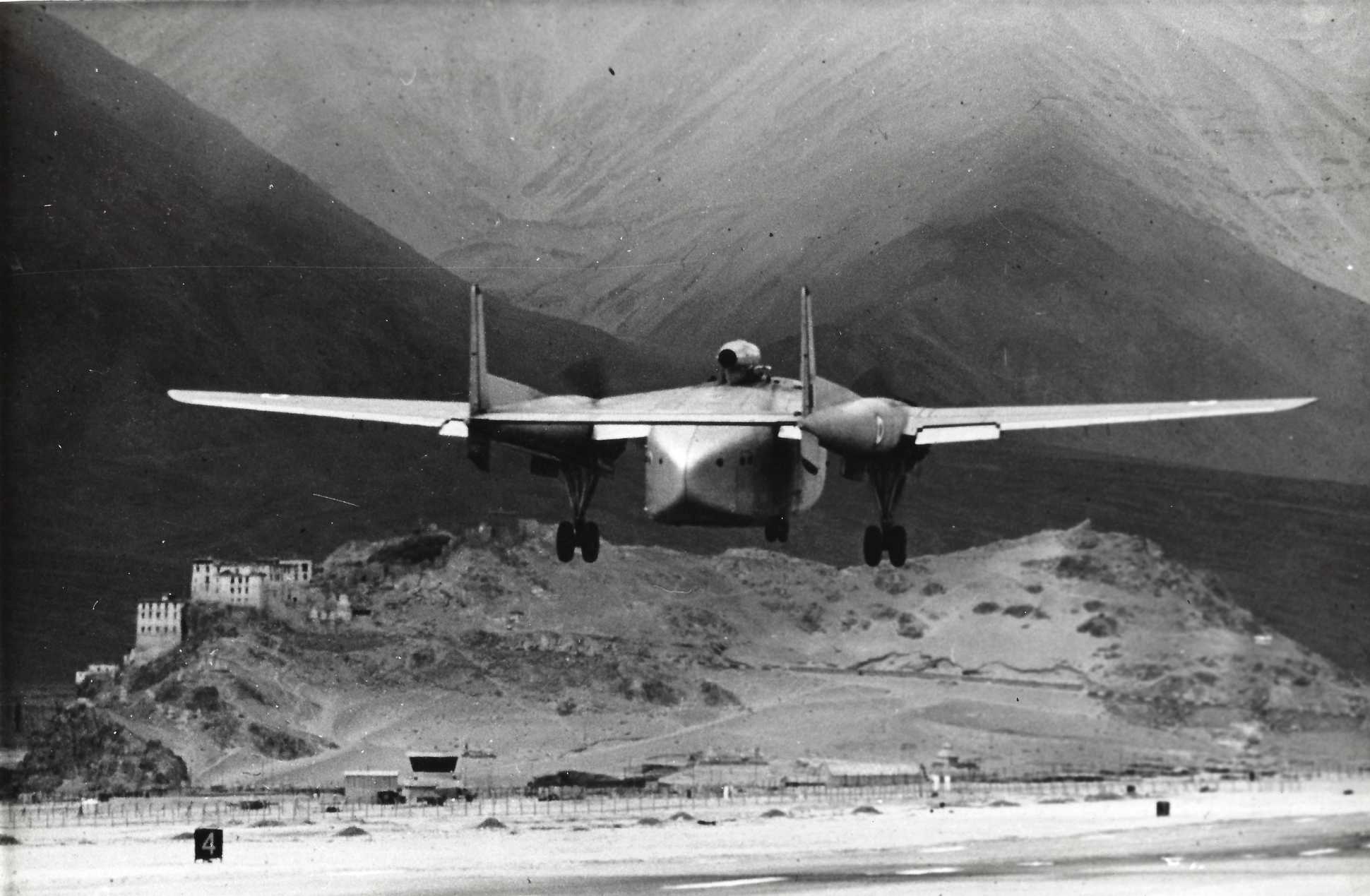
Operations in and from the high mountain regions had put a strain on the C-119Gs supporting the consolidation of ground forces in Ladakh for although the Packets were success-fully operating from advance _landing grounds upto 14,000 ft. (4,267 m.) above sea level, the Wright piston engines lost efficiency at these levels. This led to the provision of a jet engine, fitted in a dorsal booster pod. The first C-119G, suitably modified by the Overhaul Division of HAL, Bangalore with technical participation by Steward-Davis Inc. of Long Beach, California, made its initial flight on November 9th, 1961 and twenty seven C-119Gs were eventually retrofitted with HAL Orpheus 701 turbojets. This jet pack doubled safety margins, augmenting performance in difficult terrain and in poor weather conditions. On July 23rd 1962, a boosted C-119G created a world record by successfully transporting 32 personnel to and from the forward landing strip at Daulet Beg Oldi, 16,800 feet (5,120 m.) above sea level in the Karakorams.
The C-119Gs carried the responsibility of logistic support to the Himalayan front till supplemented by the An-12s. In the third week of October 1962, C-119Gs flew in troop and artillery reinforcements from Pathankot and Srinagar to 114 Infantry Brigade at Chushul and, on 24th October, flew in a troop of AMX-13 tanks of the 20th Lancers for the defence of Chushul airfield against Chinese assault. The period October-November 1962 had C-119Gs flying day and night in support of the embattled land forces and contributed significantly in airlifting the 5th Infantry Division from the plains of the Punjab to the foothills of Tezpur, 1,200 miles (1,930 km.) away.
As part of emergency military aid, the United States furnished twenty four ex-U.S.A.F. C-119Gs along with 176 overhauled powerplants in May 1963 and No. 48 Squadron was formed, the third transport formation to equip with the Packet, while the Paratroop Training School at Agra was also operating nine C-119Gs in place of its former C-47s. Although some of the earlier C-119Gs were declared as Cat.E, seventy-odd C-119Gs remained operational at the end of 1963, constituting the backbone of the IAF’s airlift capability.
C-119G formations were on standby during the December 1971 operations in Bangladesh but the plan to paradrop troops behind Jessore was made redundent by the Pakistani garrison’s early surrender. C-119Gs, operating from a number of airfields in Bengal along with other transport types, lifted the 2nd battalion Parachute Regt. plus supporting arms, mountain and, recoilless guns in an airborne assault linking up with 95 Infantry Brigade advancing from Jamalpur and the first into Dacca on the 16th December.
Notes :
The Fairchild C-119 was developed from the earlier C-82, the prime difference being a new nose configuration and more powerful engines. The C-82, first of the highly specialized freighters, made its debut in 1944, and allowed for the first time vehicles driven up ramps and into the roomy square-section hold. While paratroops could be dropped from side-doors in the cabin, heavy loads could be parachuted from the back, assisted by roller conveyors in the floor. Carrying a crew of five and sixty two fully equipped troops or upto 30,000 lb. (13,620 kg.) cargo, C-119s have been operated by eleven air arms and nearly 1200 aircraft were manufactured, including 480 C-119Gs. The C-119G is powered by two Wright R-3350-85 radials of 2,500 h.p. with one HAL-built Orpheus 701 booster turbojet of 4,700 lb.s.t. (2,134 kg.) in some of the aircraft.
| Country of origin | U.S.A. |
| Performance | Max. speed 296 m.p.h. (476 km./hr.) at 17,000 ft. (5180 m.) |
| Range (10,000 lb. (4,540 kg.) payload) 2,000 miles (3,218 km.) | |
| Initial climb rate 750 ft./min. (229m./min ) | |
| Weights | Empty 39,982 lb. (18,160 kg.) |
| Max. loaded 74,400 lb. (33,780 kg.) | |
| Dimensions | Span 109 ft. 3 in. (33.32 m.) |
| Length 86 ft. 6 in. (26.36 m.) | |
| Height 26 ft. 3 in. (8 m.) | |
| Wing area 3,150 sq. ft. (292.6 sq. m.) |