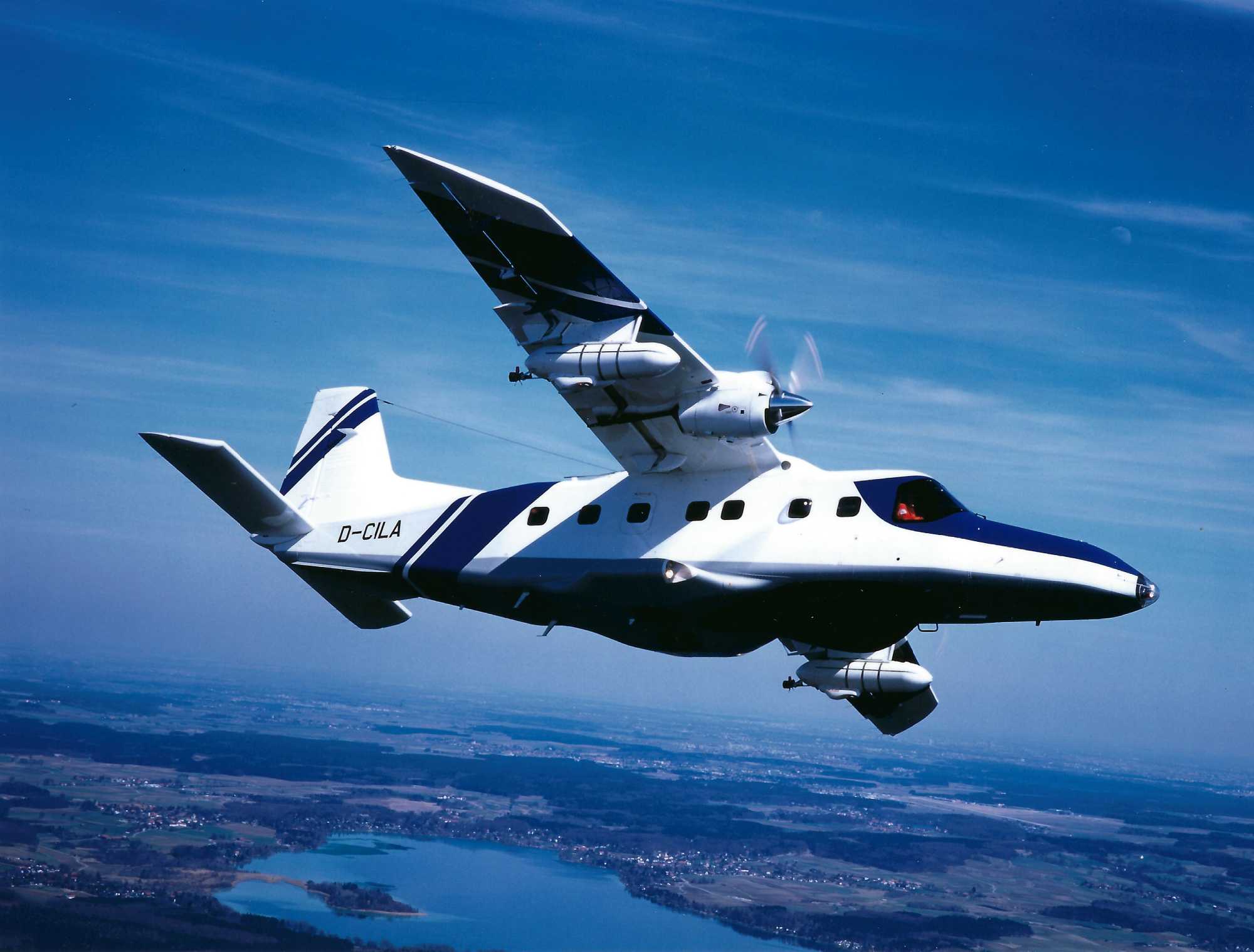

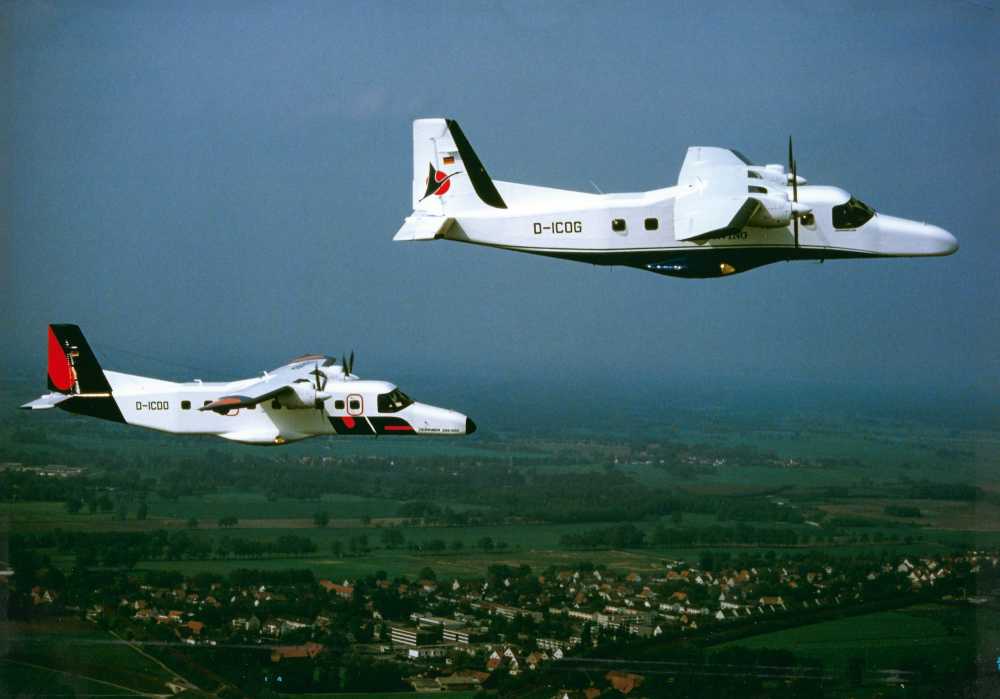
In the late 1970s, the German aircraft manufacturer Dornier took on the challenge of designing a new high-technology turboprop aircraft that could be deployed in various roles. Having spotted a hole in the market for a smaller commuter-type airliner seating up to 19 passengers and with many of the world’s De Havilland Canada (DHC) Twin Otter fleet nearing the end of their useful lives, the designers at Dornier set about designing the new aircraft.
However, to increase the new aircraft’s versatility, the designers’ brief was expanded to incorporate features that would allow the new plane to carry cargo, fly various other specialist missions and operate from unpaved surfaces. Two variants were planned, one with a capacity for 15 passengers and a stretched version capable of carrying up to 19 passengers, both with a 1-1 cabin layout.
In June 1979, Dornier flight tested a new high-technology wing design intended for the new aircraft, which by this stage had been designated as the Dornier 228.
| Title | Value |
| Title | Value |
| Title | Value |
| Title | Value |
| Title | Value |
| Title | Value |
| Title | Value |
| Title | Value |
| Title | Value |
| Title | Value |