De Havilland Canada DHC-4 Caribou
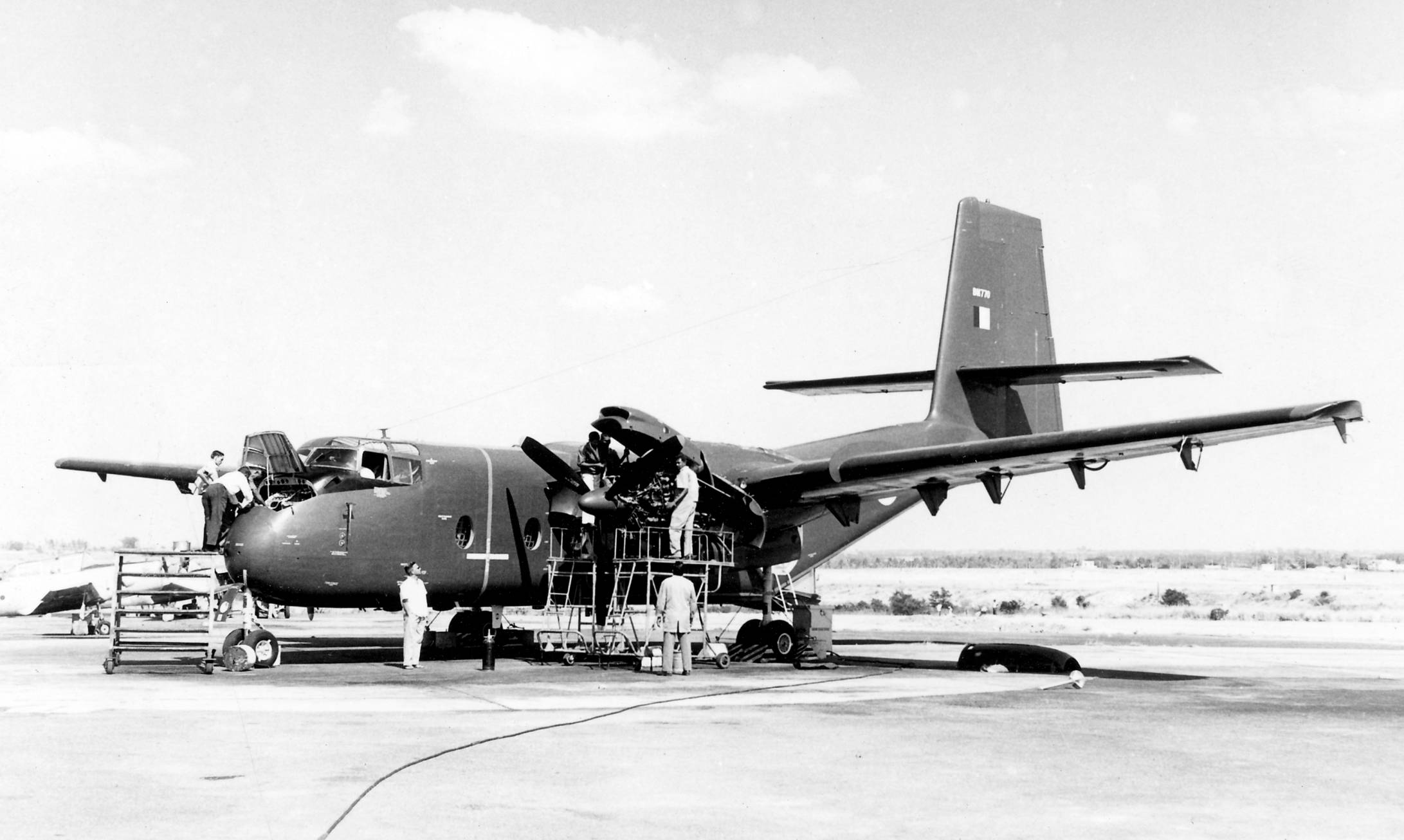
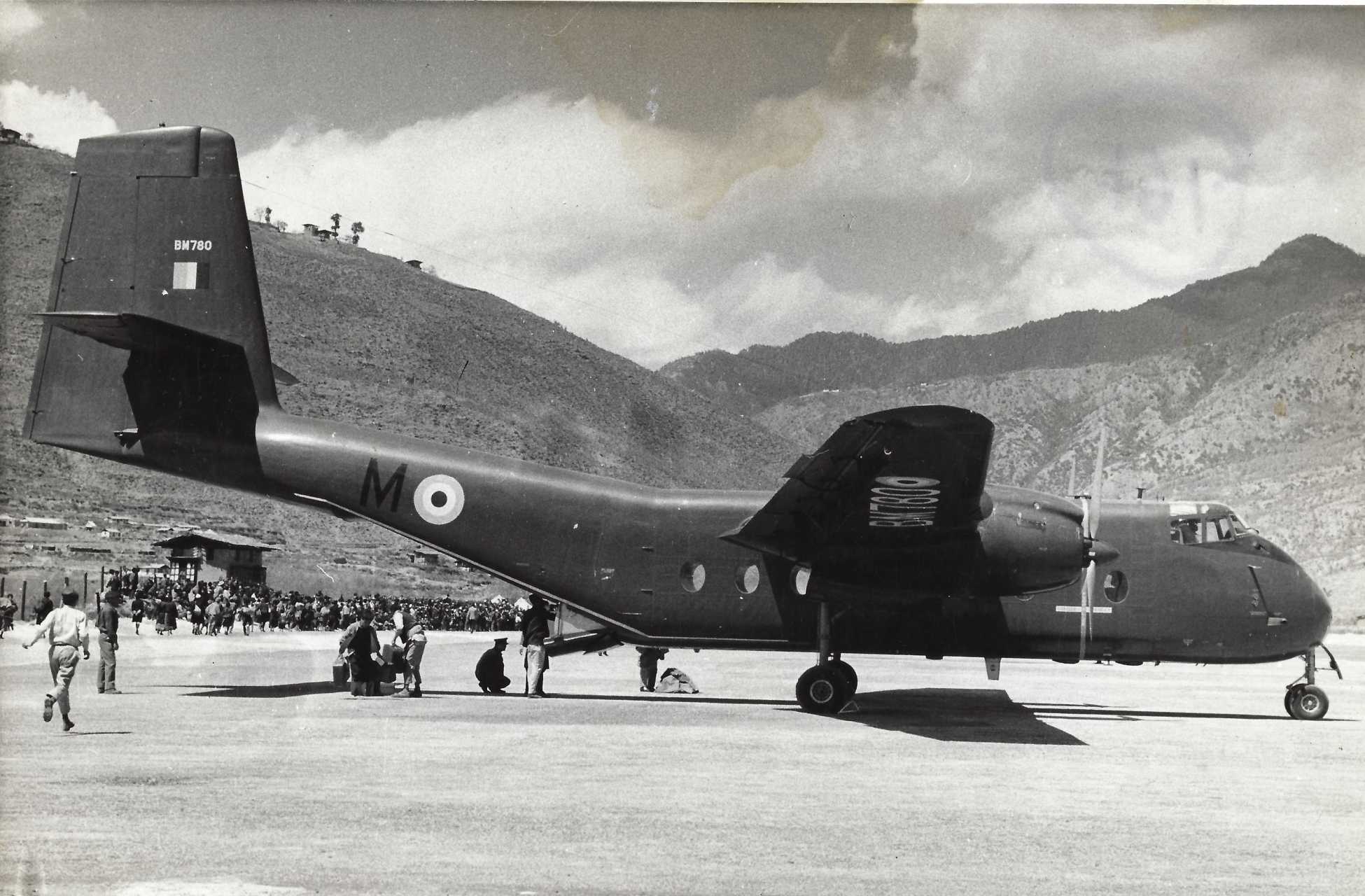
Flown to Palam in January 1963 were two CV-2B Caribous, diverted from a U.S Army contract and presented to the I.A.F. (serials BM 768, 769) as part of the U.S. arms assistance in wake of the frontier war with China. The short take-off/landing military tactical transport was immediately involved in the rugged mountain-jungle terrain of the North Eastern Frontier Agency, evacuating released Indian Army P.O.W.s from Walong and other forward airstrips in March 1963, the Caribous bearing a red cross daubed on their fuselage. A subsequent order for sixteen more Caribous was placed with Canada, the first of these (serial BM 770) being flown to India in September 1963 followed by the remaining aircraft at regular intervals in the months thereafter.
No. 33 Squadron was formed on the Caribou and committed to the tactical transport and supply role in support of the land forces in NEFA and Assam. The Caribous have operated from very short and kutcha airstrips cut out of the jungle hills, proving eminently suited to the rugged tasks assigned to them. Caribous were able to land vital supplies and reinforcements at Aijal during the Mizo insurrection in 1966.
In December 1971, a few Caribous were employed for nocturnal “nuisance” air raids on Pakistani installations in Dacca, the aircraft’s hold containing 500 lb. and 1000 lb. bombs, and proving to be of some psychological value during the two weeks of tense fighting for Bangladesh. Later, Caribous carrying personnel were amongst the first I.A.F. aircraft to land at the bomb-pitted Tezgaon airfield after the Pakistani surrender.
Notes:
The Caribou prototype first flew on July 30th 1958, first having been ordered for evaluation by the U.S. Army which arm was finally to operate the production model as the type CV-2A/2B in intra-theatre airlift operations. Powered by two Pratt and Whitney R-2000-7M2 radials of 1,450 h.p. each, the Caribou provides accommodation for 32 troops, 26 paratroops, 22 casualty stretchers, three tons of cargo or two fully-loaded jeeps. The Caribou has served with many arms in many theatres (including Viet Nam) with distinction and has been employed by U.N. observers in peace-keeping tasks.
| Country of Origin | Canada |
| Performance | Max. Speed 216 m.p.h. (348 km./hi) at 6,500 ft. (1,981 m.) |
| Range (max. fuel + 5,152 lb. (2,340 kg.) payload 1,307 miles (2,102 km.) | |
| Initial climb rate 1,355 ft./min. (413 m./min.) / Service ceiling 24,800 feet (7,560 m.) | |
| Weights | Empty 16,920 lb. (7,683 kg.) / Normal loaded 28,500 lb. (12,940 kg.) |
| Dimensions | Span 95 ft. 7 ½ in. (29.15 m.) |
| Length 72 ft. 7 in. (22.12 m.) | |
| Height 31 ft. 9 in. (9.68 m.) | |
| Wing area 912 sq. ft. (84.72 sq. m.) | |