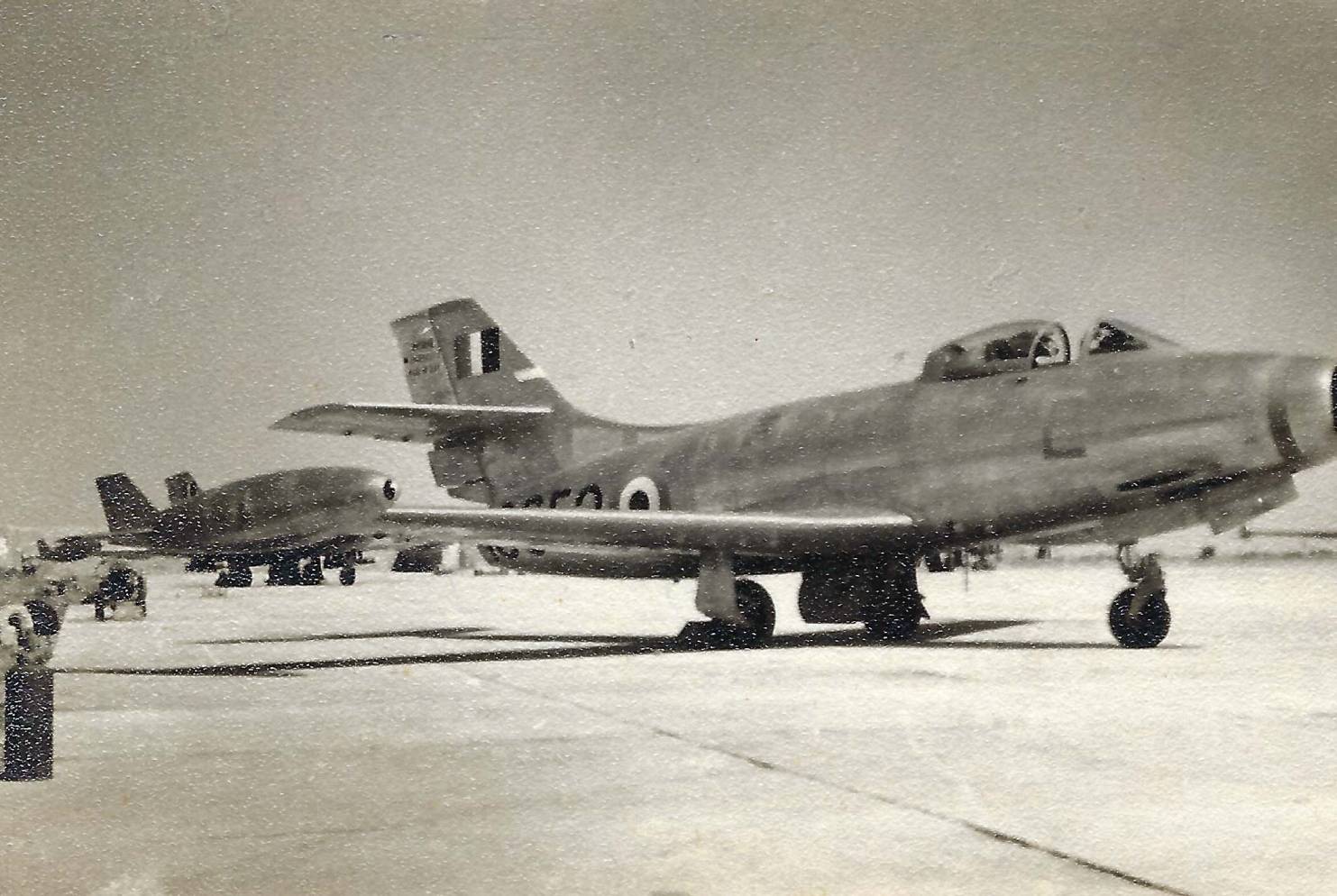
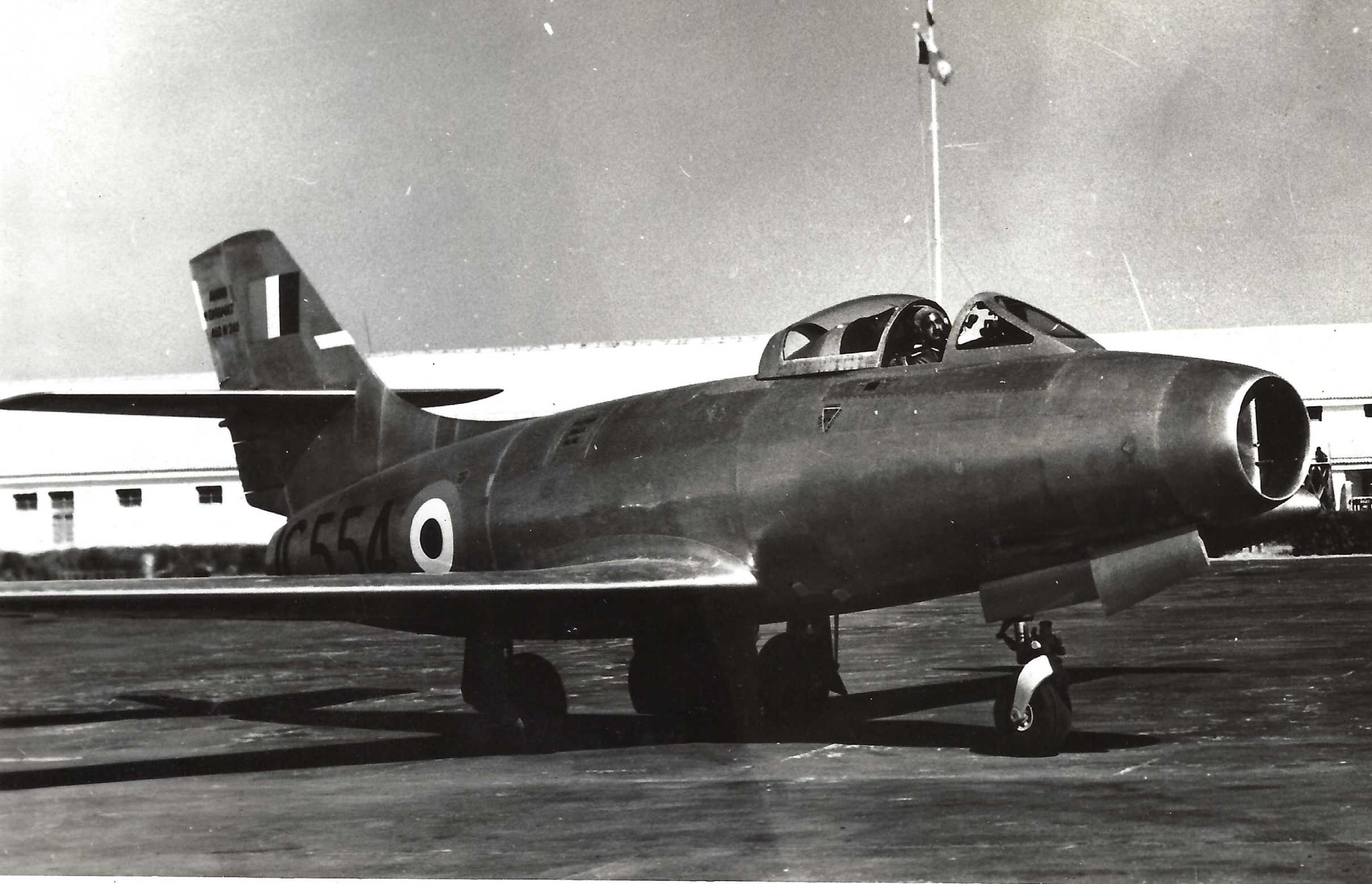


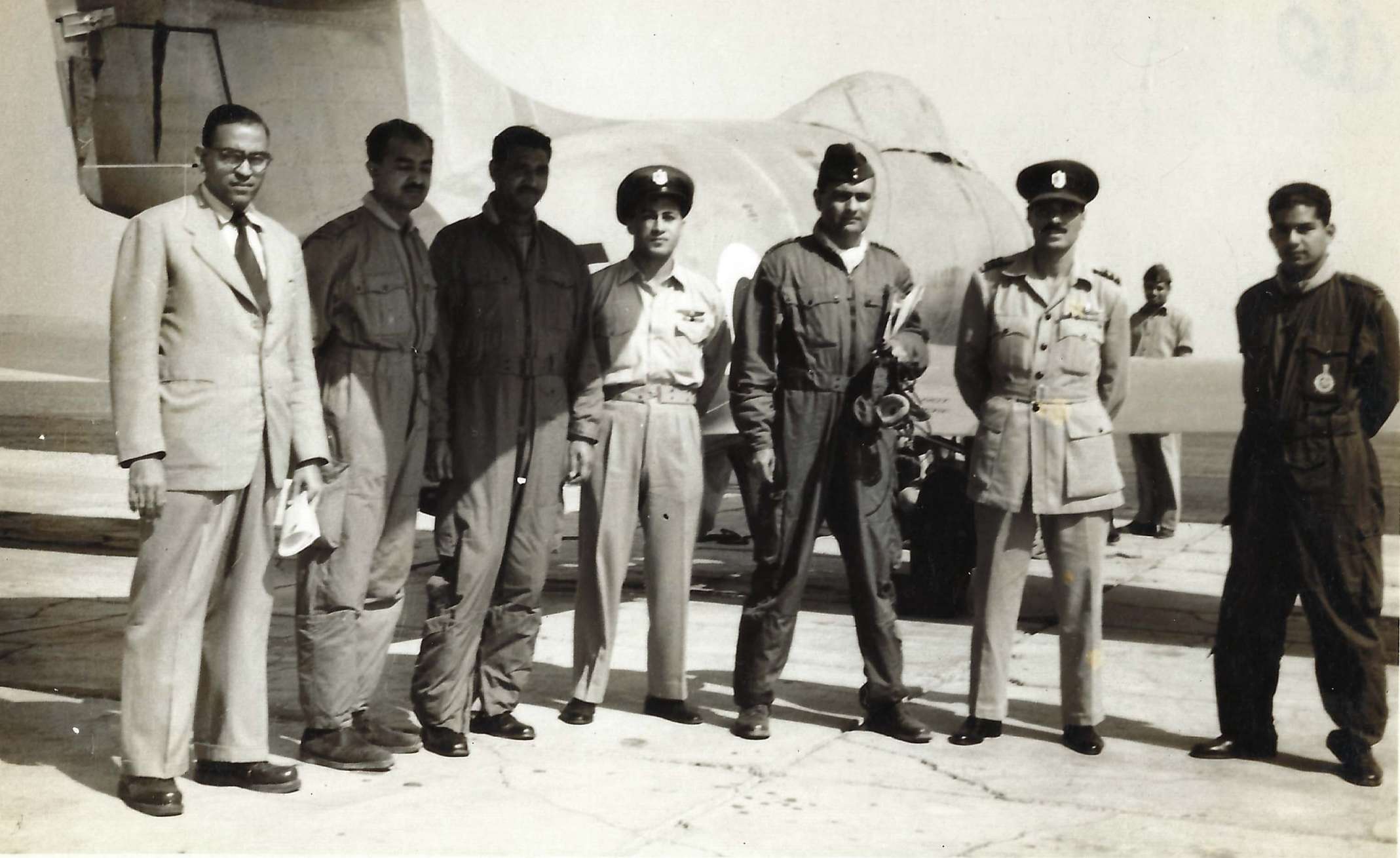
Deteriorating relations between India and Pakistan in the early fifties led to massing of troops on borders and near-war conditions. The Indian Air Force was not ready for a full-scale conflict for its strength had remained virtually the same after 1947. It was expedient that the force be greatly expanded and plans were accordingly framed for the period 1953-57. Even as the HAL-assembled Vampire F.B.52 was being inducted in quantity, the Government of India was negotiating with France for purchase of the Ouragan, the second jet fighter type to see service with the Indian Air Force. Choice of the Ouragan was initially greeted with some surprise by observers but the order constituted a deliberate decision to reduce excessive dependence upon a single source while apparently there was also some uncertainty in the availability of Venoms from Britain and Sabre Mk.30s from Australia.
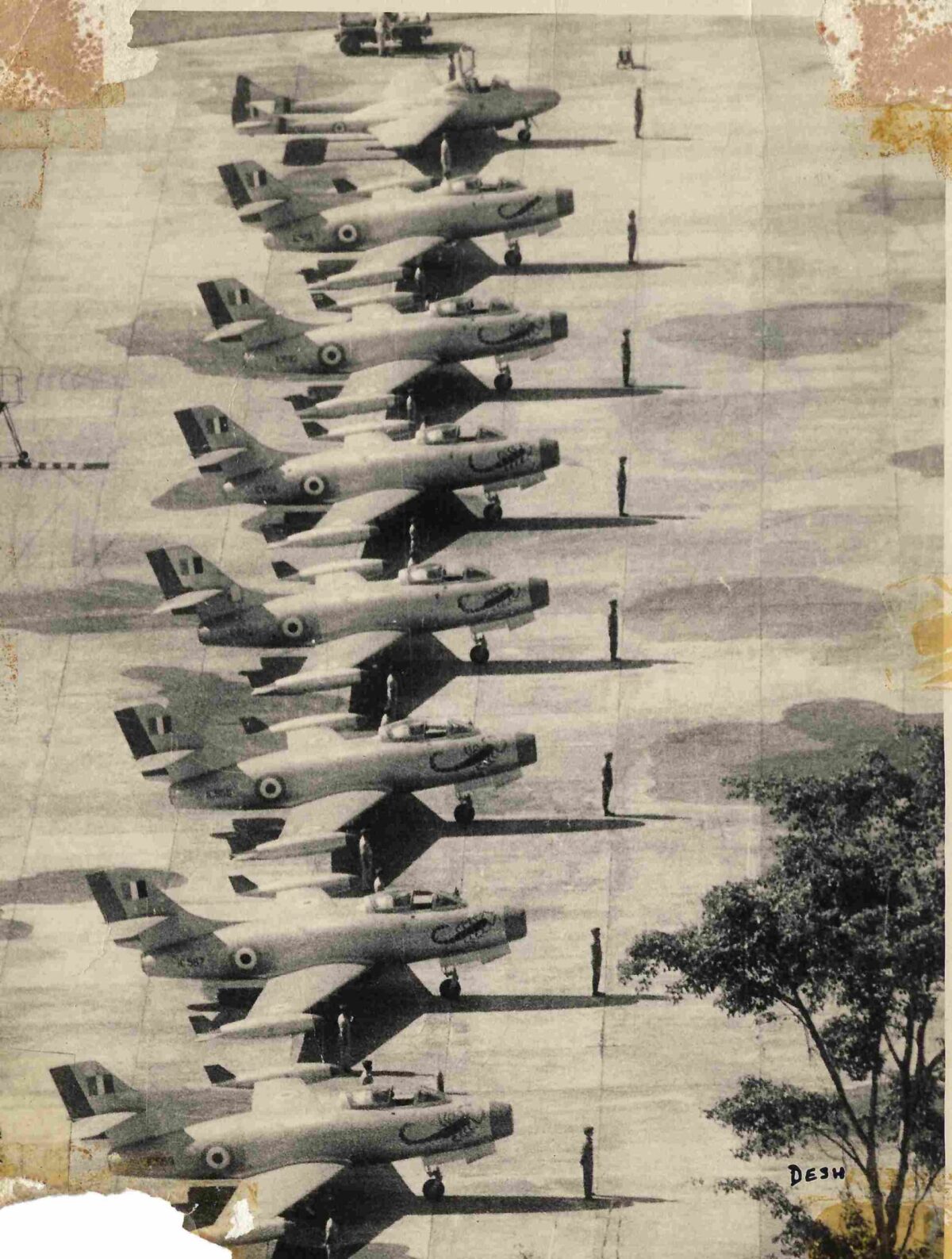
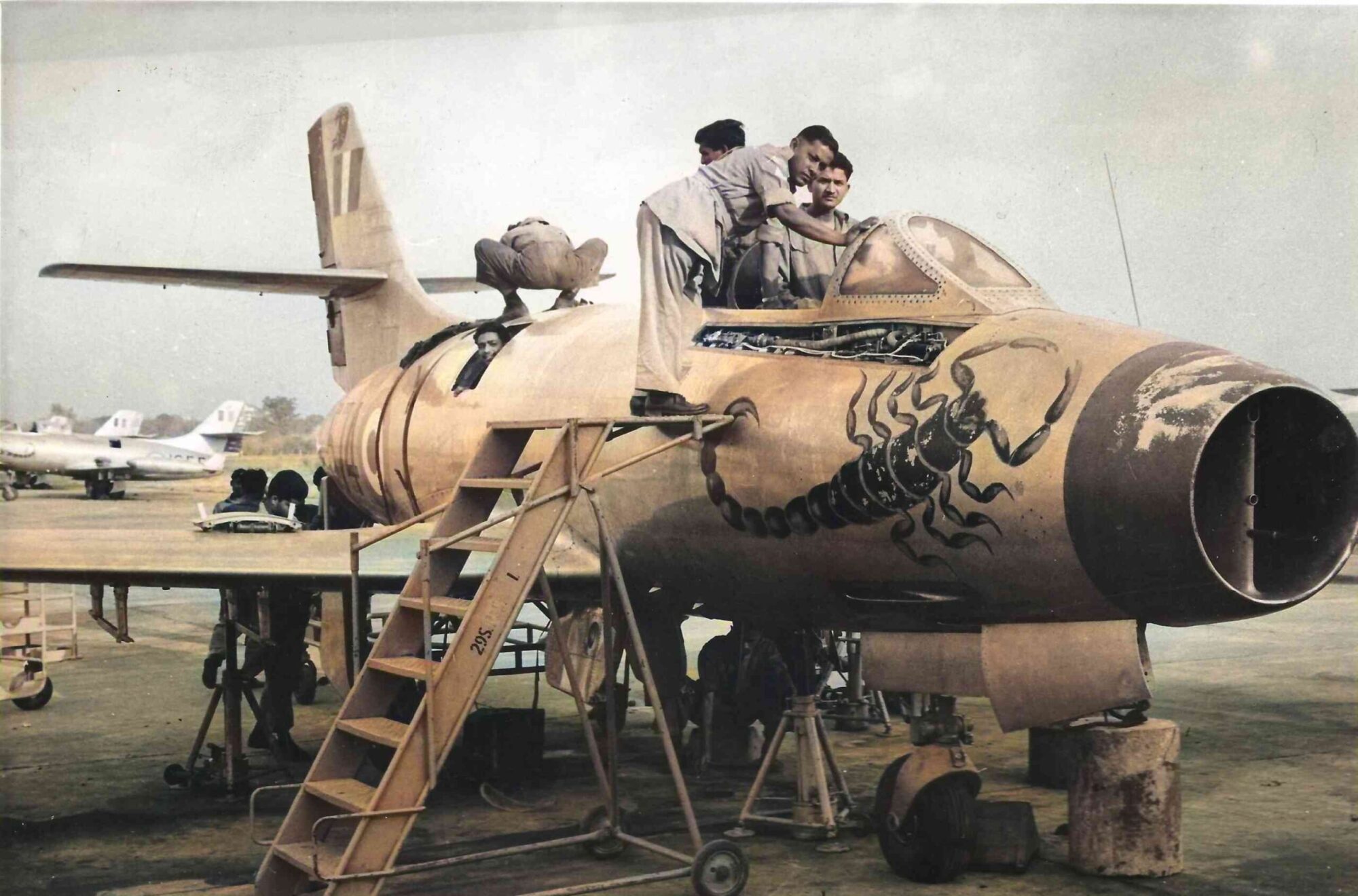
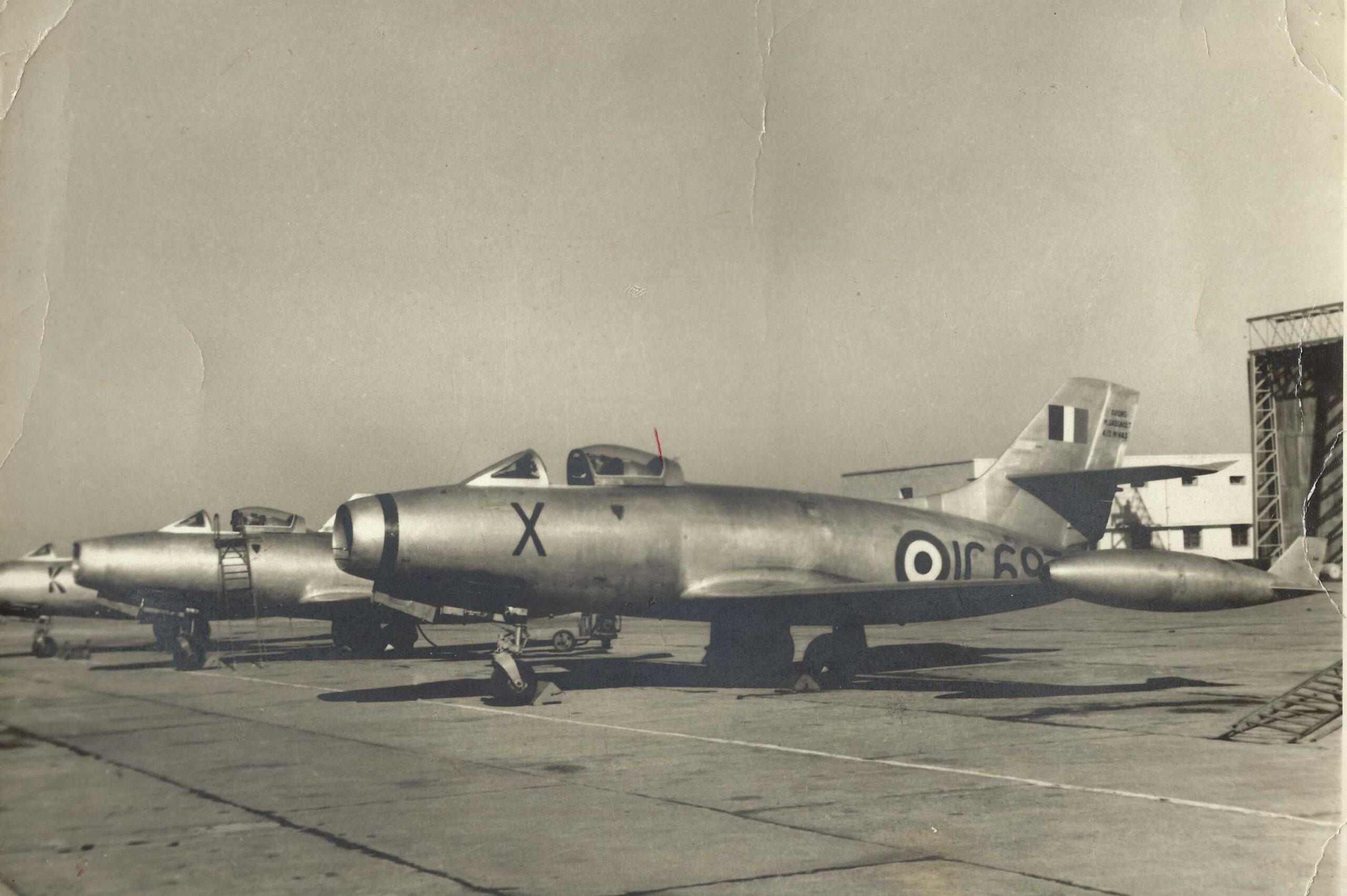
The first batch of 4 Ouragans (IC553-556) arrived at Palam on 24th October 1953 from Istres in France via Tunis, El Adem, Mafraq, Baghdad, Sharjah and Mauripur. The remaining aircraft of the order for 71 arrived “cocooned” in the French escort carrier “Dixmude” at Bombay in November 1953. The Ouragans (named Toofani in I.A.F. service) equipped Nos. 8, 3 and 4 Squadrons, their characteristic ‘rolling-thunder’ becoming a familiar sound over the Punjab and at Delhi where aerobatic Toofanis climaxed R-Day flypasts for over a decade. The Toofani was a sturdy ground-attack fighter and a follow-on order resulted in 33 additional aircraft being obtained in March 1957. The same year Nos. 3 and 8 re-equipped with the Mystere IVA, the next generation from the same stable, the Toofanis being transferred to the newly raised Nos. 29 and 47 Squadrons.
The Toofani saw action against hostile tribesmen in the jungle hills of Assam and .in December 1961, Toofanis of No. 4 Squadron from Jamnagar were employed for rocket-strikes on the Portugese fort at Diu, the fort’s arsenel being blown up and the garrison surrendering. Two Toofanis dropped 1000 lb. bombs on Diu airfield’s runway intersection and lent close support to Indian infantry.
Toofani Squadrons based in Eastern India were on stand by during the 1962 frontier-war with China but only reconnaissance missions were flown. Although no offensive sorties were called for, the Toofani would undoubtedly have acquitted itself creditably against mountain targets. In yet another shooting war, September 1965, the Toofanis of Eastern Air Command were not committed inspite of provocations mounted by the Pak A.F. from East Pakistan.
Beginning from 1966, Toofanis were phased out of service, the Squadrons re-equipping with the MiG-21FL, No. 47 being last to operate the Ouragan bidding farewell to the type in 1967, flying in their aircraft from Tezpur to Kanpur. Some Toofanis were alloted to the Armament Training Wing, Jamnagar. In July 1972, 75 Toofani-airframes were being put up for auction to scrappers at No. 1 B.R.D., Kanpur.
Notes :
The prototype Ouragan (Hurricane) made its flying debut in February 1949 and was to found a lineage which, now in its third decade, has provided every French-designed single seat fighter to enter service with the French Armee de I’Air. Formerly Marcel Bloch, the name changed to Marcel Dassault after World War II and the company’s Ouragan was designed against the specified requirement for a light fighter built around a Rolls Royce Nene engine armed with four 20 m.m. cannon. Gaining the distinction of becoming the first French fighter of post war design to enter service, some 200 Ouragans were supplied to the French air arm and, besides India, the aircraft was exported to Israel. The production Ouragan was powered by a Hispano-Suiza Nene 105 rated at 5,180 lb. s.t. (2,352 kg.) and several aircraft were modified for experimental purposes.
| Country of Orign | France |
| Armament | Four 20 m.m. Hispano Cannon with 150 r.p.g |
| Sixteen air-to-ground rockets or two 1000-1b. (454 kg.) bombs | |
| Performance | Max. speed 585 m.p.h. (941 km./hr.) at SL |
| Initial climb rate 7,573 ft./min. (2,309 m./min) | |
| Ceiling 49,200 ft. (15,000 m.) / Normal duration 1 hour 10 min. | |
| Weights | Empty 9,131 lb. (4,146 kg.) / Loaded 14,991 lb. (6,808 kg.) |
| Dimensions | Span 40 ft. 3 ½ in. (12.28 m.) / Length 35 ft. 2 ¼ in. (10.73 m.) |
| Height 13 ft. 0 in. (3.96 m.) | |
| Wing area 256.18 sq. ft. (23.8 sq. m.) |